• pankajcd@gmail.com
  • +91 86209 06088

Category Archives: Travel

  • -

Grandeur of silence in breathtaking Bhutan

Part 1

Magic mountains, mind-blowing monasteries, captivating valleys, serene landscapes, and silent streams: Mother Nature has been so expansive to this tiny kingdom.
Tucked away in the Himalayas between India and China and untouched by ‘romantic consumerism’ (to borrow eminent Israeli historian Yuval Noah Harari’s words), Bhutan is home to quaint Buddhist temples and numerous endangered flora and fauna; the tiny kingdom beckons travelers with its pristine natural beauties and daunting topography.
Having never been colonized or ruled by any foreign power, the tiny kingdom opened doors to the outside world quite late in the 1960’s and received the first tourist in the early 1970s.
Bhutan has always been promoting ‘Low volume High Value’ tourism where the number of tourists visiting Bhutan is limited and regulated. This is to showcase to the world the natural beauty and spectacular landscape, well-preserved age-old culture and traditions, family values of internal happiness as being more important than making money and generating income and the proverbial ‘rat race’. It’s not just the amount of money spent but the value and the destination that matters.
My eight-day sojourn in Bhutan bears testimony to this.

Destination: Royal Thimphu College

As our Bolero crossed Jaigaon, the border town of West Bengal, and entered Phuentsholing, and touched the Bhutanese soil I bade adieu to the chaos, cacophony and bedlam of Bengal and drove up far from the madding crowd!
What struck me particularly was Bhutanese citizens’ aspiration to do better. I visited Thimphu in 2013 and was stunned by their abiding passion for discipline, and keenness to preserve the environment. This time I found mountain roads even better (driving time from Phuentsholing to Thimphu has been reduced to four and half hours). The government’s strict directives — no blowing of horn, no littering and no smoking in public places – are being followed in letter and spirit by law-abiding citizens.
Wow!
Can we think of such a scenario in India? It’s time we learned from our ‘poorest’ neighbor.
Bitten by wanderlust and stung by the majestic beauty of Bhutan, I took the trip to this ‘tiny wonderland’ again.
After obtaining entry permits from the Phuentsholing immigration office, when we began our journey up the mountains, darkness was descending slowly.
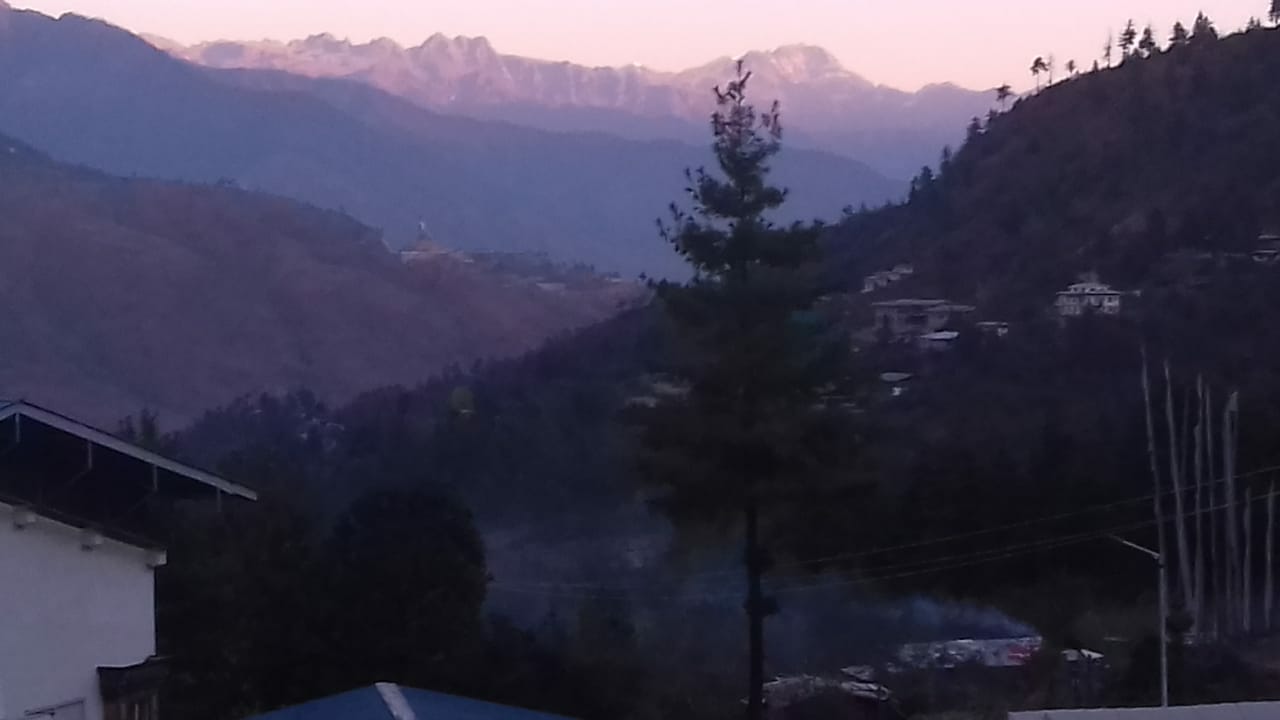
Call of the wild
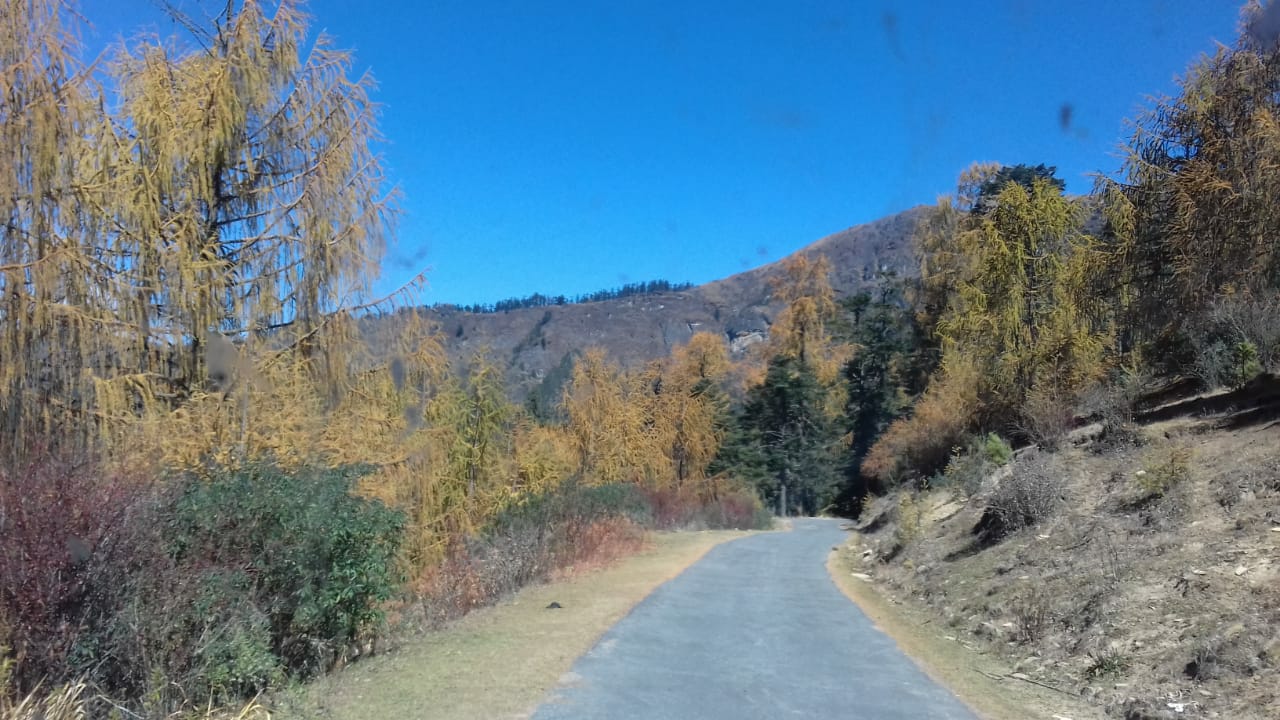
You’d better listen Mother Nature

As our car wounded its way up the mountains we’re a tad edgy. All of a sudden, a reassuring voice was heard. “Our roads have become much better now. No worries, just relax,” our driver Gyembu, a Bhutanese in his late twenties, said.
The mountains unfolded their nocturnal grandeur as we drove higher and higher. With temperature plummeting, we first stopped at a place not far from Phuentsholing. We got off the car and scampered to a wayside restaurant (Gurung restaurant) to beat the cold. The owner, a middle-aged Bhutanese, welcomed us with his native language: “Jem po leso…” (meaning welcome). His warmth and cordiality touched us all. We ordered hot, delectable momos and steaming coffee. In no time, the food was served and we gulped them down hurriedly and left the restaurant as we had a long way to go. The car had to negotiate a series of sharp turns (Blow Horn sign was there) on the way up the mountains. We kept savoring the beauty of the majestic mountains and countless ridgelines defining gorgeous valleys in the dark.
We finally reached the Royal Thimphu College (RTC) campus around 10pm. The security guard at the huge tastefully and aesthetically-made gate greeted us, his politeness and refinement unmistakable. My sister-in-law, who is an associate professor, department of business studies, made everything ready for us. We’re taken to an amazing two-storied wooden, elegantly-designed building overlooking the Himalayas.
Chilled to the bone, we got off the car, shivering (temperature dipped to 1 degree Celsius). The picturesque college campus (7546ft and about 700ft above Thimphu) and the surrounding visual marvel will be our home for the next eight days.

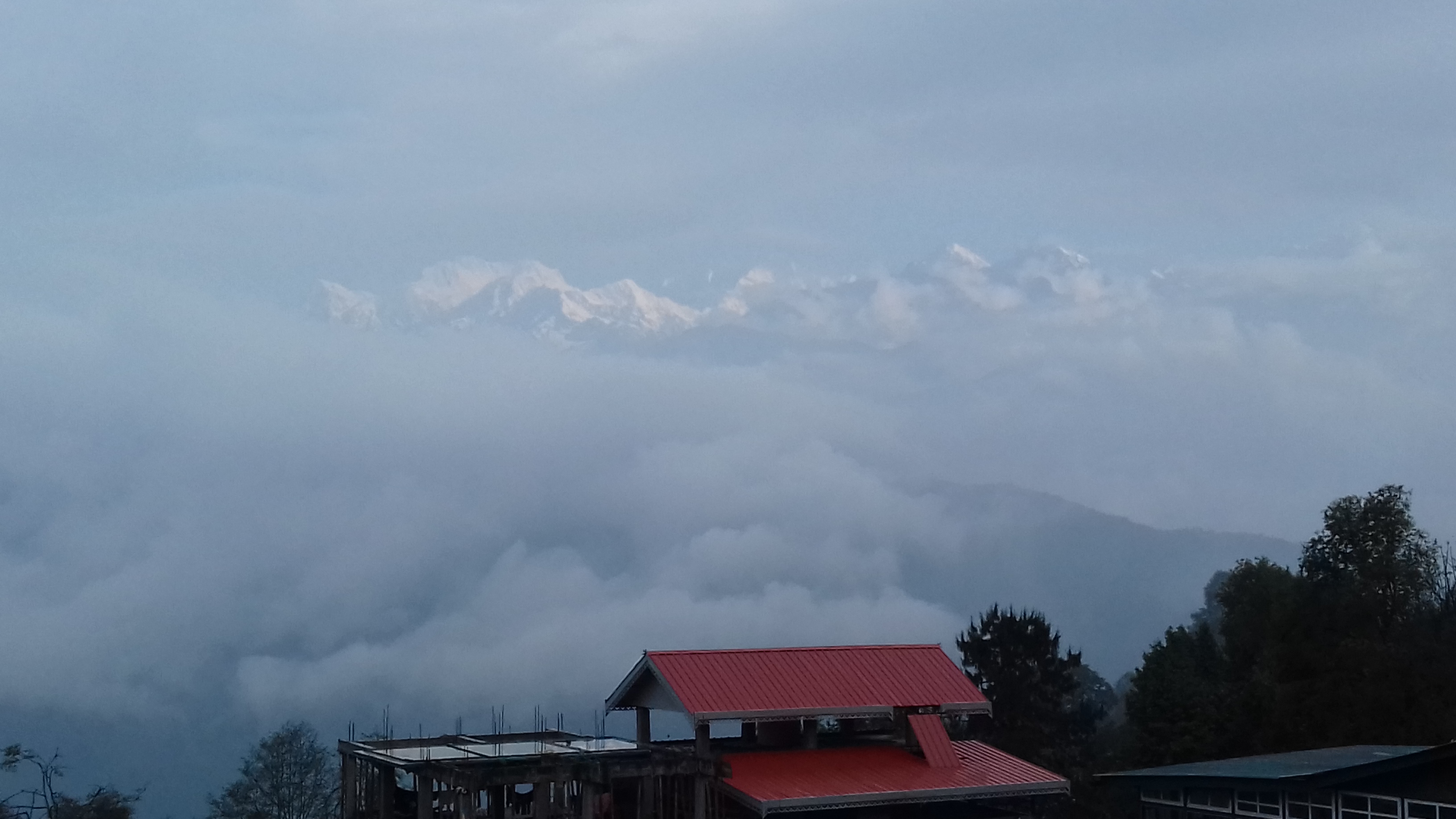
Snow-capped Jomolhari, known as ‘the bride of Kangchenjunga’
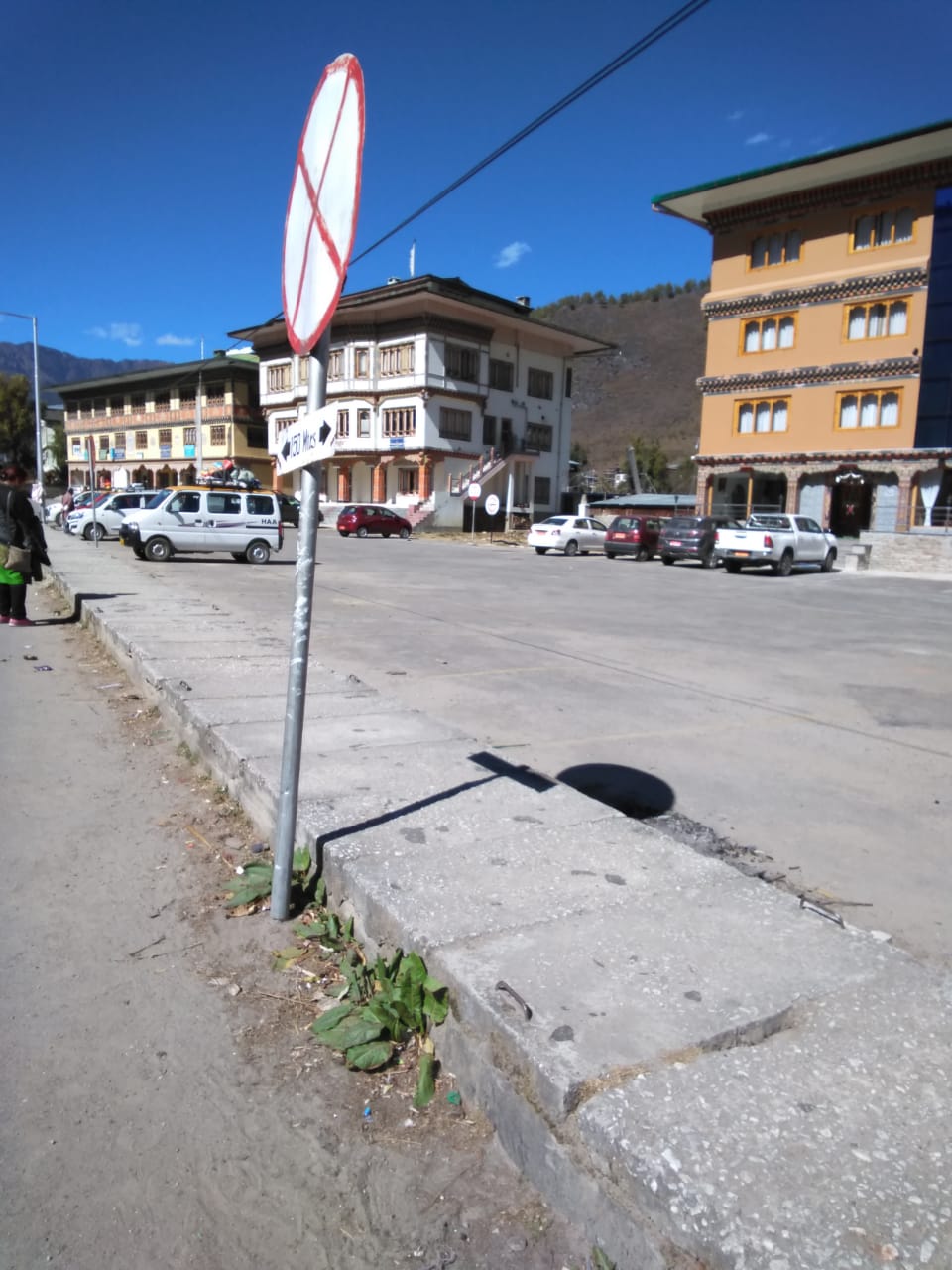
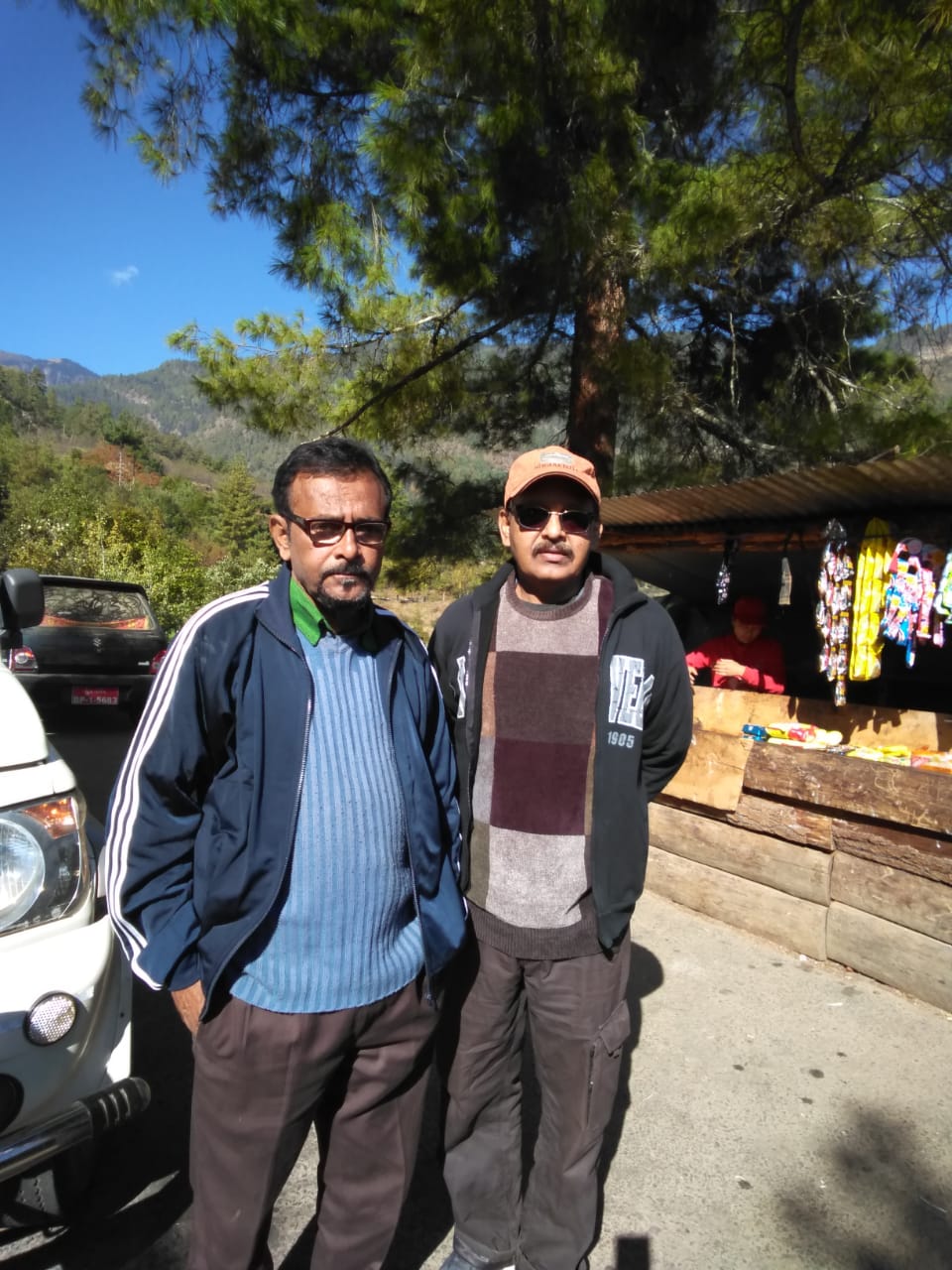
(To be continued)

  • -

Let Bengal learn from Sikkim

Destination: Rinchenpong, West Sikkim
As our Bolero reached Rangpo, a town in east Sikkim bordering with Bengal, and penetrated the white wall of morning mists, we were greeted with a visual marvel. Melting snows giving birth to mighty waterfalls, lush green valleys, roaring rivers and steep hillsides created a picture of paradise on earth.
A Sikkimese cop strode up to our car at the border and wanted to see our I-cards. “Just one I-card is enough,” he said, his politeness and refinement unmistakable. (Are Bengal cops listening?)
I gave him my I-card. “Welcome to Sikkim. Enjoy your trip,” the cop said. The policeman’s cordiality and warmth of feeling touched me.

Kingly Kanchenjunga from Rinchenpong,

Even though we were groggy (Teesta-Torsha pulled into the NJP station at 2.40am and we had to wait till 5.30am for the car), the stunning sights around whipped us into a frenzy.
Leaving Rangpo behind, our car drove up the hill’s winding roads. The morning sun caressed the meandering Teesta creating a mystic ambience. I was mesmerized by Nature’s majestic beauty.
We reached Melli, 22km from Rangpo around 9.30am.
Melli lies both in Bengal and Sikkim. The part of the town in Bengal is called Melli Bazaar. The town lies on NH 31A connecting Siliguri to Gangtok. Melli is the main entry point for West and South Sikkim districts. Jawaharlal Nehru Bridge, the longest bridge in Sikkim, connects the two parts of the town.

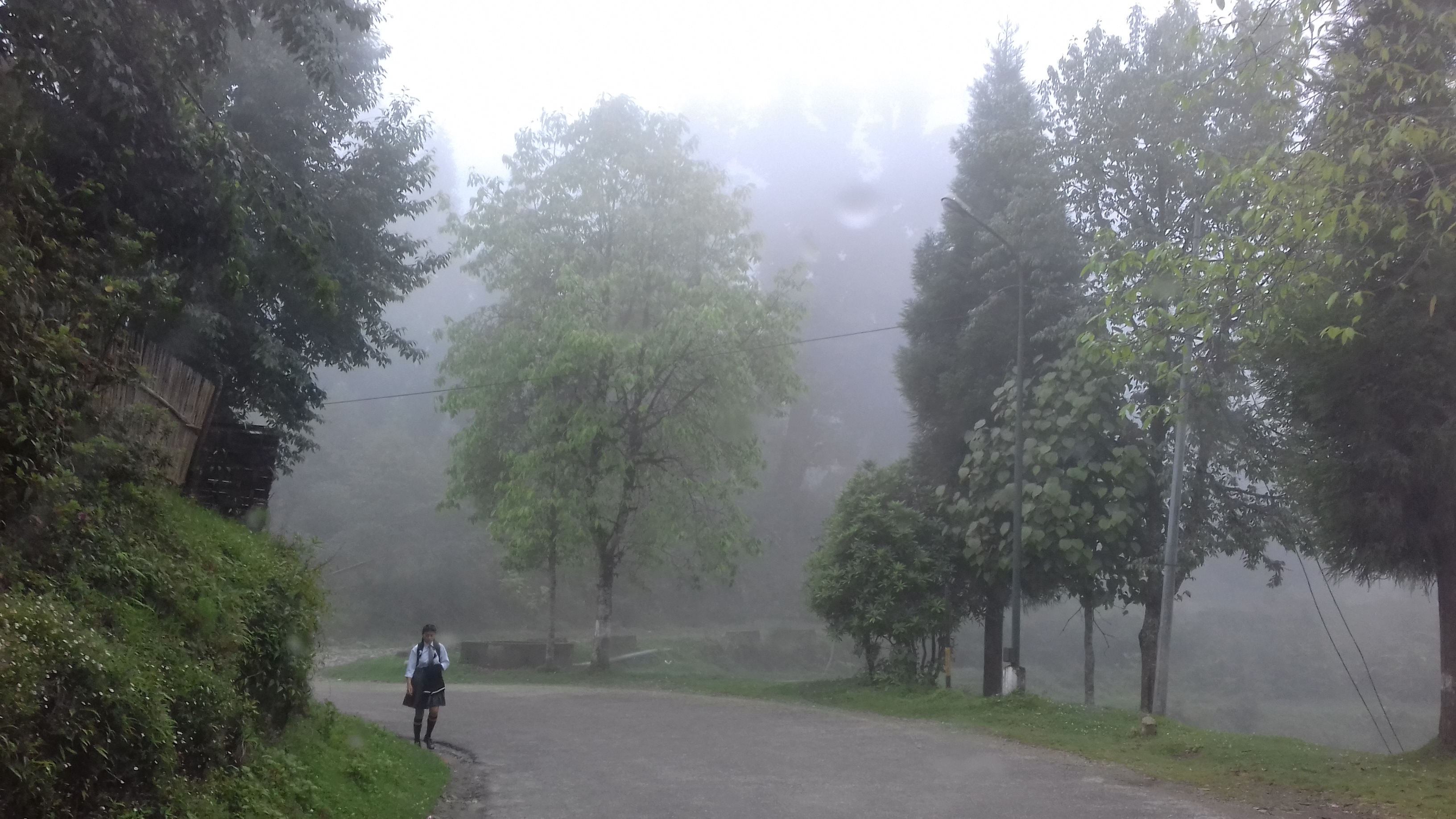
Misty morning at Ravangla, south Sikkim

We got off the car and walked into a wayside restaurant for breakfast. We had steaming vegetable momos and tea.
Melli is located 7 km upstream from Teesta Bazaar. On the Sikkim side lies Yuksom Brewery which produces most of the beer in the region. The brewery and a biscuit factory are the major industries in the region. One can go for river rafting here.
The car then left Melli Bazaar for Rinchenpong, 62km away. On our way, we saw innocent faces of Sikkimese children as they walk to their school; we also saw people arranging their wares in the middle of the market. Then came our driver’s warning: “Don’t throw anything on roads through window.” He added: “Plastic is banned and smoking in public places forbidden in Sikkim.” My friend Bapi was let down by the sudden announcement. “Well, you can smoke inside your hotel rooms,” said the driver.
Bapi sighed in relief.

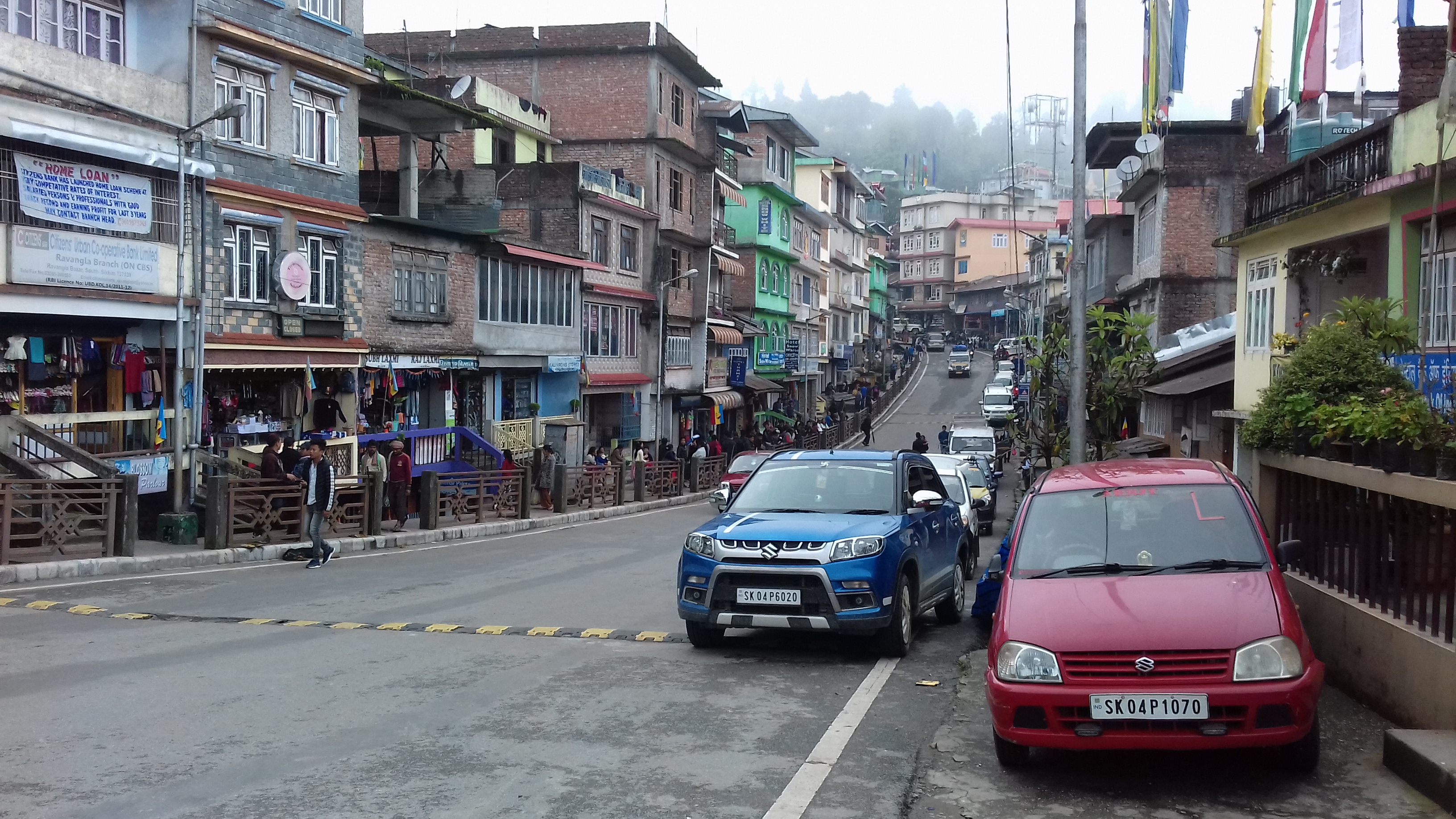
Chowk Bazar, Ravangla: Cleanliness is Sikkim’s hallmark

We reached Rinchenpong (5600ft) around 12.30pm. The soothing noontime sun welcomed us as our car came to a halt at Rinchenpong bazaar. I was stunned by the spick-and-span marketplace.
Our hotel Denzong Residency was a few paces up the hill from Rinchenpong bazaar. The hotel guys came and took our luggage. Our third-floor room offered a breathtaking view of Mt. Khanchendzonga.
We were thrilled.
What struck me about the Rinchenpong bazaar was its tranquility and quietude. I haven’t seen such a noise-free bazaar anywhere in India. Sikkimese people are soft-spoken and well-mannered. During my week-long stay in Sikkim I didn’t encounter any brawls or altercations there. Let me share an incident: I went to the Axis Bank ATM near Ravangla chowk to withdraw money. My friend Bapi and I stood in the queue. As our turn came, we walked into the kiosk. The ATM’s display monitor was a tad different from what we have in Kolkata. So it took some more time for us to take money. There were as many as nine people waiting in the queue. But no one shouted at us nor was there any angry outburst. They waited patiently. This is amazing.
Can anyone in Bengal think of such a scenario? I was stunned by their civility and gentility.
Will the Bengalees take a lesson?

When will Bengal learn from Sikkim?

Sikkim, which in 1998 became the first Indian state to ban disposable plastic bags, is among the first to target single-use plastic bottles. “In 2016, Sikkim took two major decisions. It banned the use of packaged drinking water in government offices and government events. Second, it banned the use of Styrofoam and disposable thermocol plates and cutlery in the entire state to cut down toxic plastic pollution and tackle its ever-increasing garbage problem,” said Rajendra Pradhan, a school teacher, sitting at his home-cum-shop near the Rinchenpong bazaar.
“From April this year, we’ve banned import of all vegetables from Bengal,” Pradhan said.
I hung my head in shame.

The Singshore Bridge, Pelling, west Sikkim: Asia’s second highest bridge

Sikkim was declared the first organic state in the country which means all food produced in Sikkim is free of pesticides. It is also India’s first state to ban open defecation. Urinating in public can cost Rs 500.
The government has made it mandatory to have a sanitary toilet at home to be eligible for any benefits or to contest in village-level elections. This has resulted in the success of the program which was envisaged long before Swachch Bharat Campaign (Clean India Campaign) was even conceptualized. The state even banned firecrackers in 2014 to contain noise and air pollution.
“Sikkim is a rapidly evolving society. Gangtok, Namchi and Jorethang are urbanizing at a steady pace. Gangtok will be connected by air soon. (SpiceJet has already made trial flights). More and more people are being attracted by business opportunities.
“Though Sikkim is predominantly a Buddhist state its spirit is secular and churches, monasteries, gurdwaras, mosques and temples co-exist peacefully here.
“It’s hard to define the true culture of Sikkim. It could be called a wonderful mosaic, a unique pattern made beautiful by the unusual harmony in its individually colorful threads. And that is its trait.
The Lepchas, Bhutias and Nepalese are the predominant communities and there have been inter-racial marriages among the three over the years,” said Pradhan.

Another interesting thing I observed: One could hardly see the photos or festoons featuring Pawan Kumar Chamling on the roads of Sikkim. Chamling has surpassed the record of former Bengal CM Jyoti Basu by becoming the longest serving chief minister of any Indian state. “If a CM sincerely works for the people of his state, is there any need to hang his photos or festoons?” said Somnath Pradhan, a shopkeeper at Ravangla chowk.
Compare this with Bengal: Photos of Bengal CM have adorned the streets, roads and hills of the entire state. Wherever one goes, he or she will see the CM’s photos and posters.
What a waste of money! What an eyesore!
Is the Bengal leadership listening?


  • -

‘Drunk Shakespeare’ a must-see for New York visitors

It was January 10. The New York City was going through the longest spell of freezing days since 1961. Undeterred by the bone-chilling cold, Suparno booked two tickets for Drunk Shakespeare, a Broadway show on the 8th Avenue.

Read More

  • -

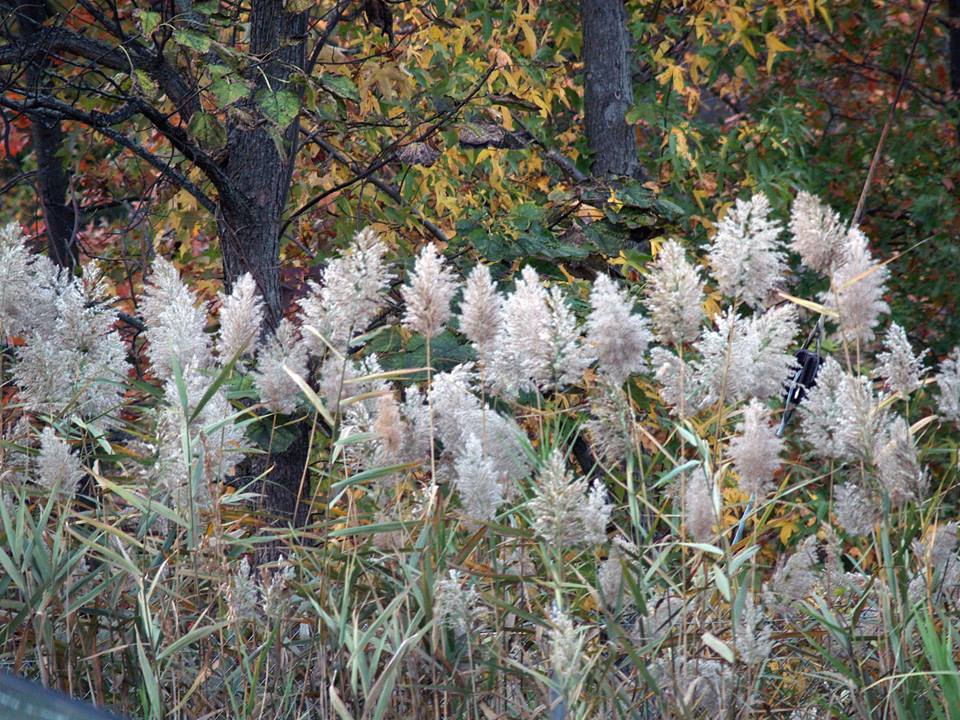
Fabulous fall color at breathtaking Bear Mountain, NY

The noontime November sun was caressing Caldwell, NJ. There was a softness in the air and the 62F temperature was pretty much perfect for a long drive.
My friend Suparno told me to get ready to see the fall foliage at Bear Mountain State Park in New York State, 51 miles away. I was ecstatic.

Read More

  • -

Journey’s over, memories remain

The spirit of the ‘Wild West’ was even more in the air when the train pulled in the gambling town of Reno (NV). I met a guy who got off at this station. He said he’d take a taxi ride into the hills and follow the routes taken by the prospectors who hunted for silver after the Comstock Lode discovery in the 1850s.

Read More

  • -

Experiencing the ‘Wild West’ on astonishing Amtrak

The final leg of my journey across America from New York to San Francisco begins.
I spent almost the entire day sitting in the sightseers’ lounge (well, that’s the heart of the California Zephyr), beholding the red-rock canyons and mountain passes on one of the world’s most spectacular stretches of railway.
As the train steamed out of Glenwood Springs (Co) at 5.35pm, I heard an announcement that “the California Zephyr won’t be running for one whole week from tomorrow due to track repair”. I considered myself lucky!

Read More

  • -

Coursing through Colorado’s canyons on Amtrak

Even though the entire trip in California Zephyr takes two days and two nights, if you want, you can hop off for 24-hour whistle-stop in three places.
I met a guy who’d strike out across the prairies of Iowa and Nebraska before overnighting at the little town of Granby in Colorado’s Middle Park Area. After snaking though the Rockies, he would stop at Reno, Nevada, for the nearby Wild West mining town of Virginia City. Finally, he would overnight in Sacramento, California’s little state capital.

Read More

Pankaj Adhikari’s Blogs

Thanks for stopping by.