• pankajcd@gmail.com
  • +91 86209 06088

Monthly Archives: February 2026

  • -

Well-regulated, human and ethically-aligned AI systems are what we need

Tags : 

In New Delhi where the India AI Impact Summit was held last week (Feb 16-21), the AI Guru and UC Berkley Professor Stuart Russell had emphasized on the ethical and safety side of the AI systems. He said the only way world leaders could be jolted to act on the safety side of the AI development would be a disaster whose scale is similar to the Chernobyl accident.

On 26 April 1986, reactor number 4 of the Chernobyl Nuclear Power Plant (in the erstwhile Soviet Union, now in Ukraine) exploded killing 31 people and affecting about 340,000 people. Even though direct deaths were low, its long-term impact was lethal with estimates ranging from 4,000 (UN) to over 1 lakh (Greenpeace) people affected due to cancers and other radiation-related illnesses.

Prof Russell had said:”…all the leading CEOs have admitted there’s enormous risk to humanity. Privately they will say ‘I wish I could stop’. The one person who has said publicly is Dario Amodel, the CEO of Anthropic.”

Prof Russell, who is also the president of International Association for Safe and Ethical AL, said: “I’ve heard similar things in private from other CEOs, to the point where one of them said the scenarios are so grim that the best case would be a Chernobyl-scale disaster. Because that would get governments to regulate.”

Russell made a fervent appeal to all governments across the world to recognize in advance the AI’s huge risks and protect humanity. “Look at what the risks are and set acceptable levels of risk for each type of consequence that we might be considering.”

Yann LeCun, , one of the pioneering AI researchers who had received the Turing Award, often called “the Nobel Prize of computing”, last month warned the tech ‘herd’ would eventually hit a dead end in its development after years of work and hundreds of billions of dollars spent .

LeCun has been working on the technology for more than a decade that is now the foundation for modern AI. He also served as chief AI scientist at Meta, the parent company of Facebook and Instagram.

After quitting Meta last November, he has become increasingly vocal in his criticism of Silicon Valley’s relentless pursuit of building intelligent machines.

Godfather of AI and 2024 Nobel-prize winner Geoffrey Hinton had warned “people are misusing AI and there are huge risks as computers are becoming ‘super smart’.” His main mission was to warn people that AI will become more intelligent than humans. “When digital intelligence overtakes biological intelligence, it doesn’t augur well for humanity…they kept silencing me but I was trying to warn them,” the British-Canadian scientist had said.

He had suggested that a global agreement similar to the 1997 Chemical Weapons Convention might be a good first step toward establishing international rules against weaponized AI.

The era of ‘move fast and break things’— the longtime mantra of Silicon Valley giants—is now facing a severe challenge from the AI technology.

Leading AI experts have urged companies to take a cautious approach and warned about the risks and dangers posed by this ground-breaking technology.

Tech firms, including Google and Microsoft, are pouring billions into the AI research.  Amazon has launched its own in-house AI model known as Titan.

The Adani Group in India recently announced that it would invest about $100 billion in the AI infrastructure by 2035.

“Humans are more important than money,” said Yoshua Bengio, one of the pioneers of AI technology. He had said he felt “lost” because of the direction that the AI is headed in.

Remember J. Robert Oppenheimer  had expressed deep remorse over the destruction caused by his creation, famously telling US President Truman “I feel I have blood on my hands.” He deeply regretted the ensuing arms race, the civilian deaths in Japan and the development of more powerful hydrogen.

With the AI now in the hands of world leaders like Trump and Putin, and rapacious and mercenary companies/ tech firms, whose one and only aim is profiteering and money-making, humanity is now at the mercy of a vast and uncaring universe.


  • -

Time for Americans to re-read JFK’s ‘Profiles in Courage’

Tags : 

Time has come to take a look into JFK’s Pulitzer Prize-winning classic, Profiles in Courage (1956) anew, which served as a clarion call to every American.

JFK had chronicled eight legendary senators in the book—John Quincy Adams, Daniel Webster, Thomas Hart Benton, Sam Houston, Edmund G. Ross, Lucius Quintus Cincinnatus Lamar, George Norris and Robert A. Taft. The book is not just the stories of the past but a book of hope and confidence for American future.

“My father’s heroes were men and women who were willing to risk their careers to do what was right for our country,” writes Caroline Kennedy, JFK’s daughter, in the book’s Introduction.

At a time when President Donald Trump is pushing the US and the whole world toward perdition, JFK’s book offers a moving, powerful and relevant testament to the “indomitable national spirit and an unparalleled celebration of that most noble of human virtues–courage”.

Robert F. Kennedy wrote in the book’s Foreword that “…what happens to the country, to the world, depends on what we do with what others have left us.”

From the time Trump was sworn in second time as the US President, his actions demonstrated a bizarre and eccentric mindset that is sure to spell doom not only for the US, but for the entire world. His conscience, personal standard of ethics, his integrity or morality, if at all–deserve outright condemnation. If the American people realize the devastating consequences of Trump’s presidency, they should take the cue from JFK’s book. The acts of courage described in the book must inspire the Americans to rise against this megalomaniac and loony.

Tragically, Trump’s second term is already more lawless and more authoritarian than any in the US history.  Many of his actions are mind-boggling and heart-wrenching. Many seem powered by ignorance and incoherence, by capriciousness and callousness. With his desire to disrupt anything and everything, the President is ready to pulverize the very foundations of the US government and its democracy.

The most dangerous part of his agenda is his war against constitution— defying judges’ order, deporting people without due process, pardoning hundreds of January 6 criminals, and calling to impeach judges who have ruled against him.

Trump’s latest misadventure has been the global trade war after he has enacted a series of steep tariffs affecting nearly all goods imported into the US and which will cost ordinary Americans greatly.

JFK’s life and career has inspired millions of people around the world and shown the truth of the 7th US President Andrew Jackson’s statement: “One man of courage makes a majority”.

In this unfortunate state of affairs, it is high time Americans took a re-look into JFK’s book, got inspired and stopped bending their knees to Trump.


  • -

Embracing the unique eco-system of Sunderbans, not merely tiger sighting

Tags : 

Travel-hungry Bengali tourists coming back from Sunderbans face just one question: “Baagh dekhechhen? (Have you seen a tiger?).

It’s ridiculous and a fatuous question. Few tourists embark on a trip to the Sunderbans with a different mindset. The beauty and grandeur of this mangrove forest lie in its unique, vast eco-system. Unfortunately, tourists head toward the Sunderbans in droves, especially during in December-January (peak season) months just to witness what is known across the world as the Royal Bengal Tiger, one of the most powerful Big Cats in the world both in terms of physical strength and hunting prowess.

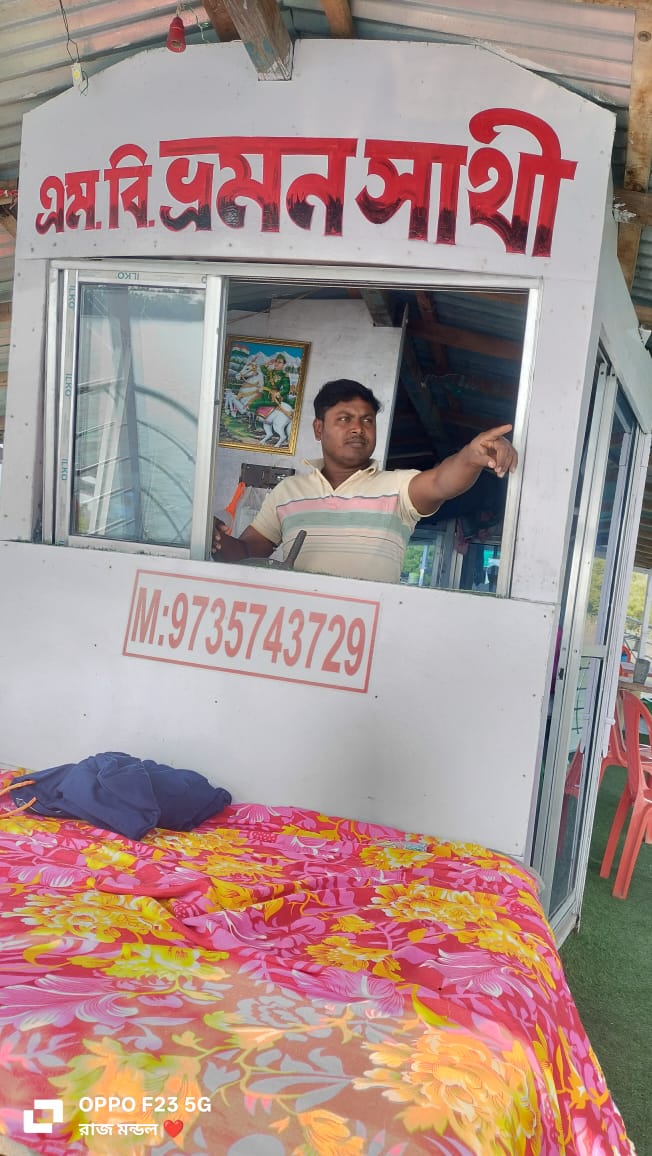
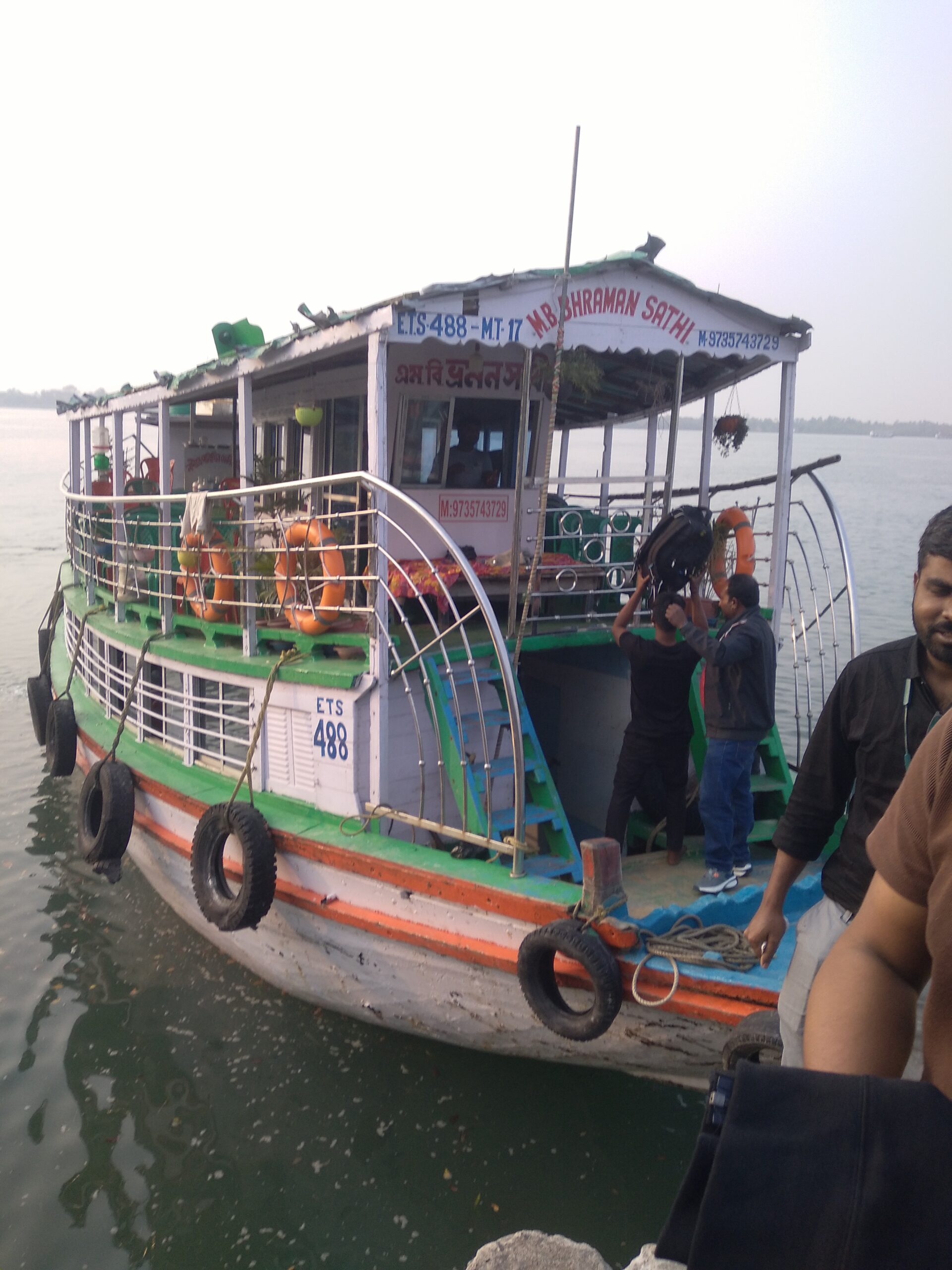
MB Bhraman Sathi: A wonderful experience

On average, a Bengal tiger weighs between 90 and 225kg, with males being large and heavier than females. The strength of a Bengal tiger can be gauged by its powerful jaws, sharp teeth and muscular body.

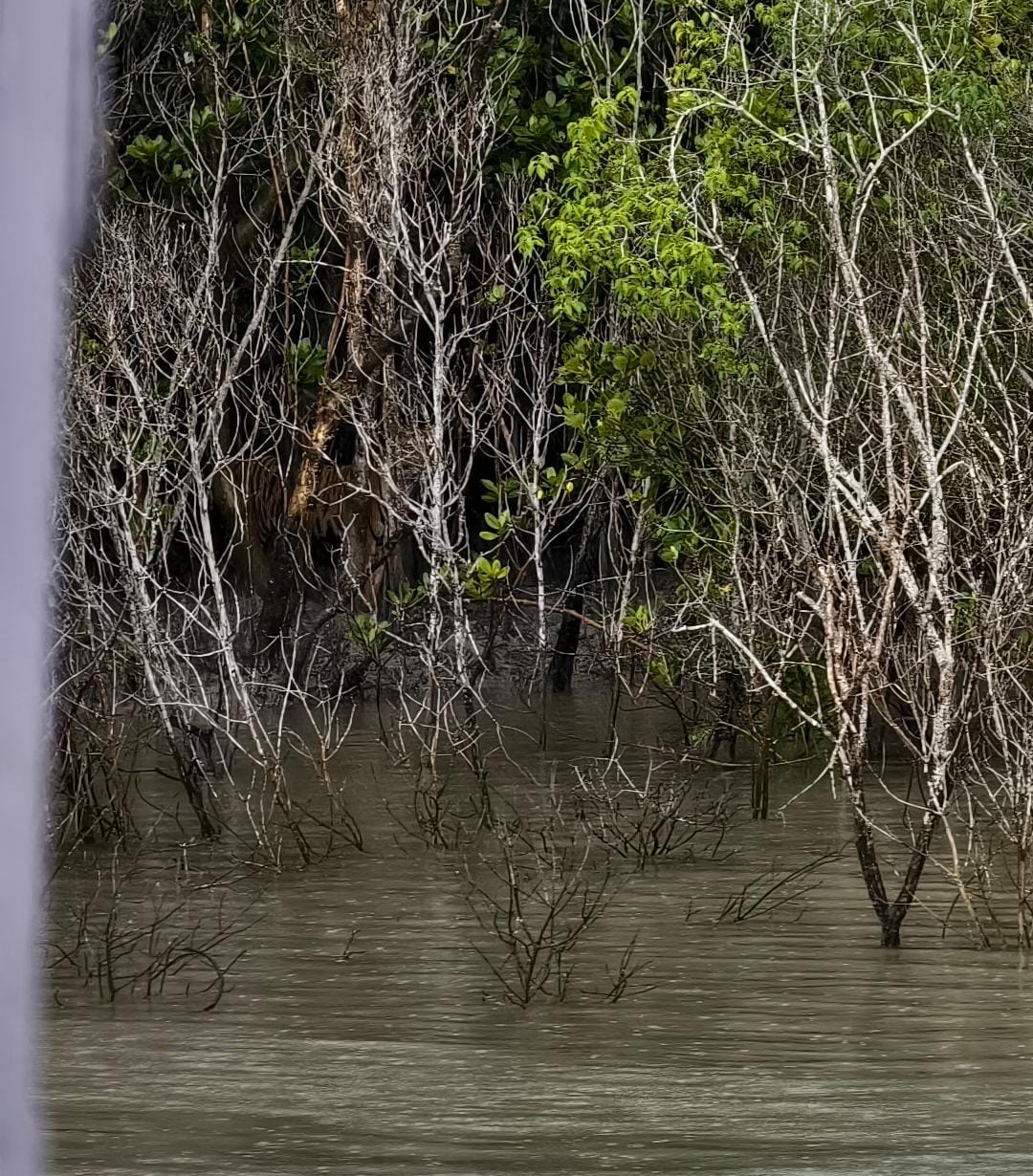
We (myself, my son Jishu, my childhood buddy Raju and his wife) decided to take the trip entirely from a different perspective. And At the end of the trip (two nights three days) organized by Travels Destination Sunderban, Canning, we were mighty pleased and had witnessed the unique bio-diversity of the Sunderbans: a maze of tidal rivers, creeks and islands, unparalleled bio-diversity, varied, diverse and abundant bird life and a mesmerizing landscape of dense forests, intricate root systems and the rhythmic pulse of tides — all inextricably linked with resilient local rural culture. It harbors over 450 species of fauna (including salt-water crocodiles, dolphins and turtles) and 26 mangrove species acting as a crucial, resilient natural coastal shield.

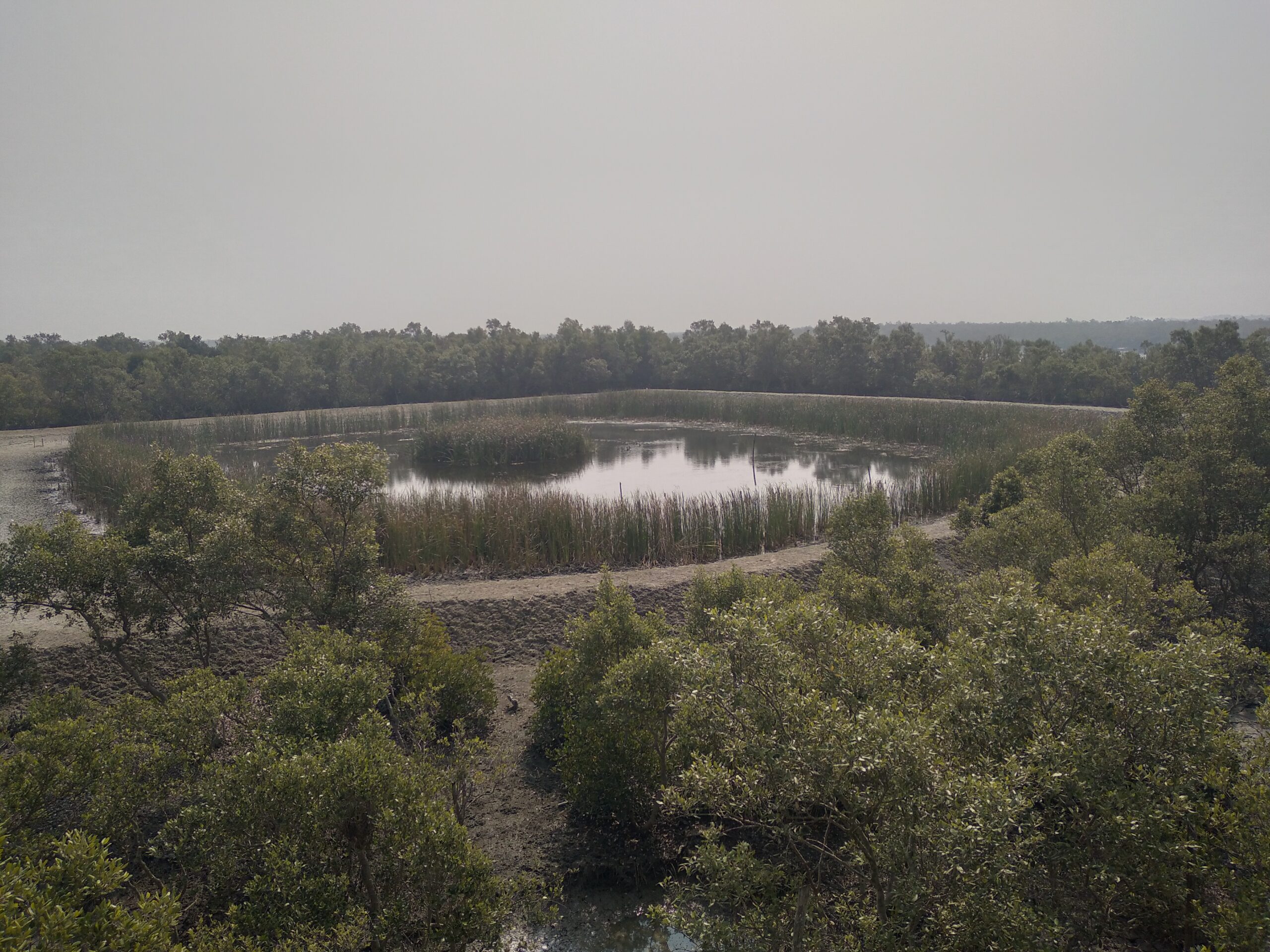
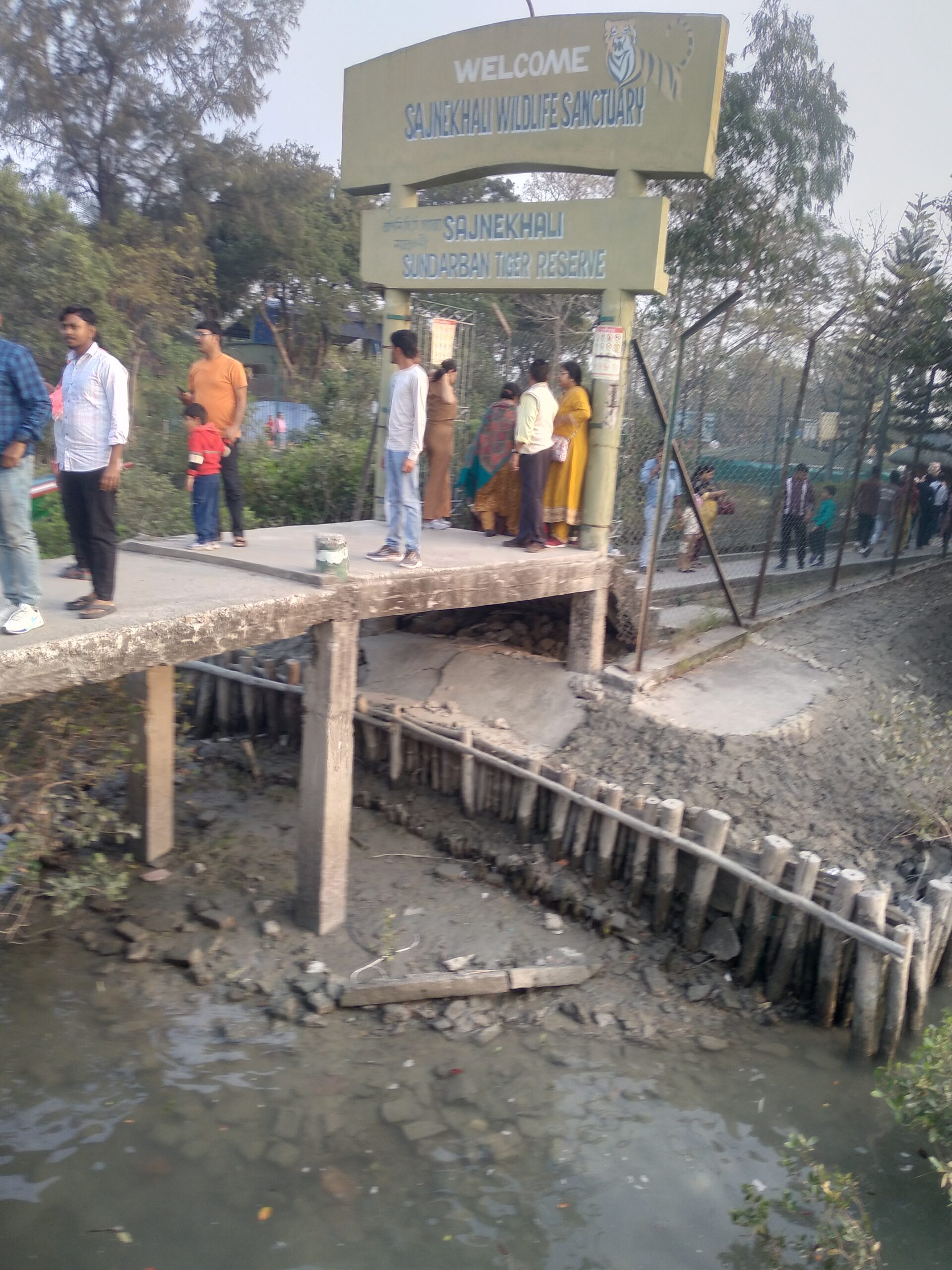
Sajnekhali wildlife sanctuary: One of the most popular watchtowers

Well, to understand the Sunderbans’ diverse eco-system, one should visit at least six to seven times. We embarked on the trip from Canning railway station at 9.15am from where we were transferred to Sonakhali (about 18kms) by an auto.

We got off the vehicle and boarded MB Bhramon sathi (that’s the name of our motor boat) anchored on the river Hegel. Sujoy and Shuvo and Babusona (the tour operator staff) warmly greeted us on the boat. We then kept our baggage in the lower deck and promptly went upstairs to take our seats. The upper deck was neatly arranged with chairs and later with tables for breakfast and lunch. Our first stop was Sajnekhali Wildlife Sanctuary.

Kalu Sardar: The motor boat pilot who recounted terrifying tales

As we stood on the upper deck, the January-end crisp cold air soothed our souls. Refreshing touch of wind and whisper of cool air made my day. Soon we’re given breakfast (luchi, aloor dom and misti followed by tea). All items were very well-cooked and we enjoyed them thoroughly. I decided to talk to the pilot (locally known as sareng) of the boat to get to know the specific routes the boat will take and the places they’d take us to.

A breathtaking view from the watchtower

Kalu Sardar, the 40-year-old pilot, an ever smiling and amiable guy, hugely impressed me as he kept narrating spine-chilling anecdotes and unbelievable incidents during 22 years of his cruising experience across the creeks and rivers of the Sunderbans. “I even saw an encounter of a crocodile with a Royal Bengal Tiger,” Sardar recalled. “The battle between the two ended up with the tiger receiving serious injuries and later dying before it was taken by the Forest Department guys to the hospital.”

“I saw a tiger only last month at Bonbibi Bharani, a narrow scenic creek in the mangrove forest,” Sardar reminisced. He also told during the Aila how one old woman, her 12-year-old grand-daughter and a Royal Bengal Tiger spent a night together.

I shuddered in disbelief!!

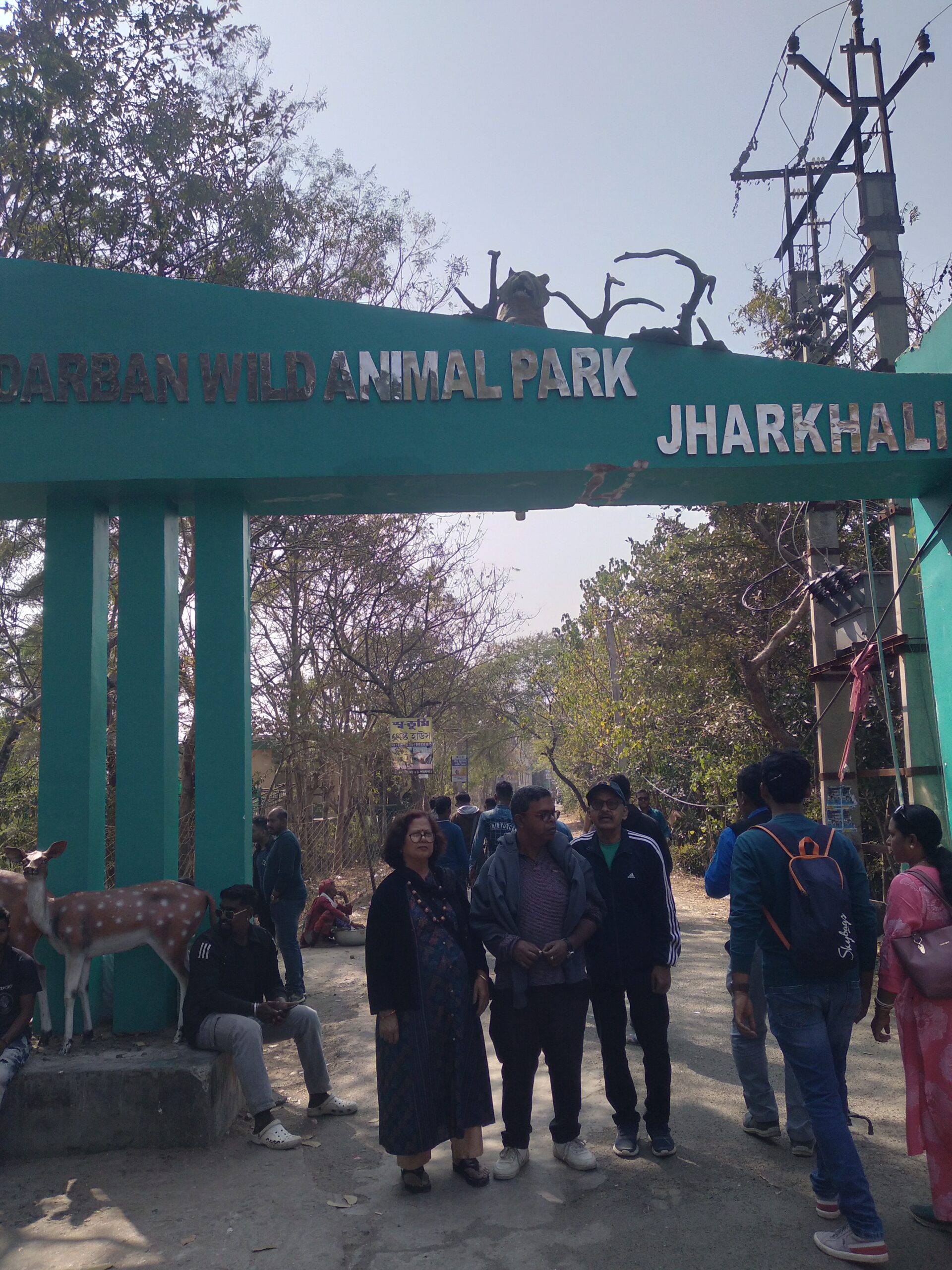
We visited Jharkhali Wild Animal Park where two tigers, two crocodiles and two peacocks are kept. Here we saw a Tiger Rescue Centre. As we stepped into the Park, we saw a number of signboards displaying pictures of different kinds of birds found there. A big board displays pictures of official birds of all states and Union Territories of India. Here I came to know that official bird of West Bengal is white-breasted kingfisher. I felt ashamed of my own ignorance!

Magnificent mangrove

Another board displays pictures of different migratory water birds in the Sunderbans. We also saw a huge enclosure where an eagle was kept. Another signboard displays pictures of different types of crabs and mollusk of the Sunderbans.

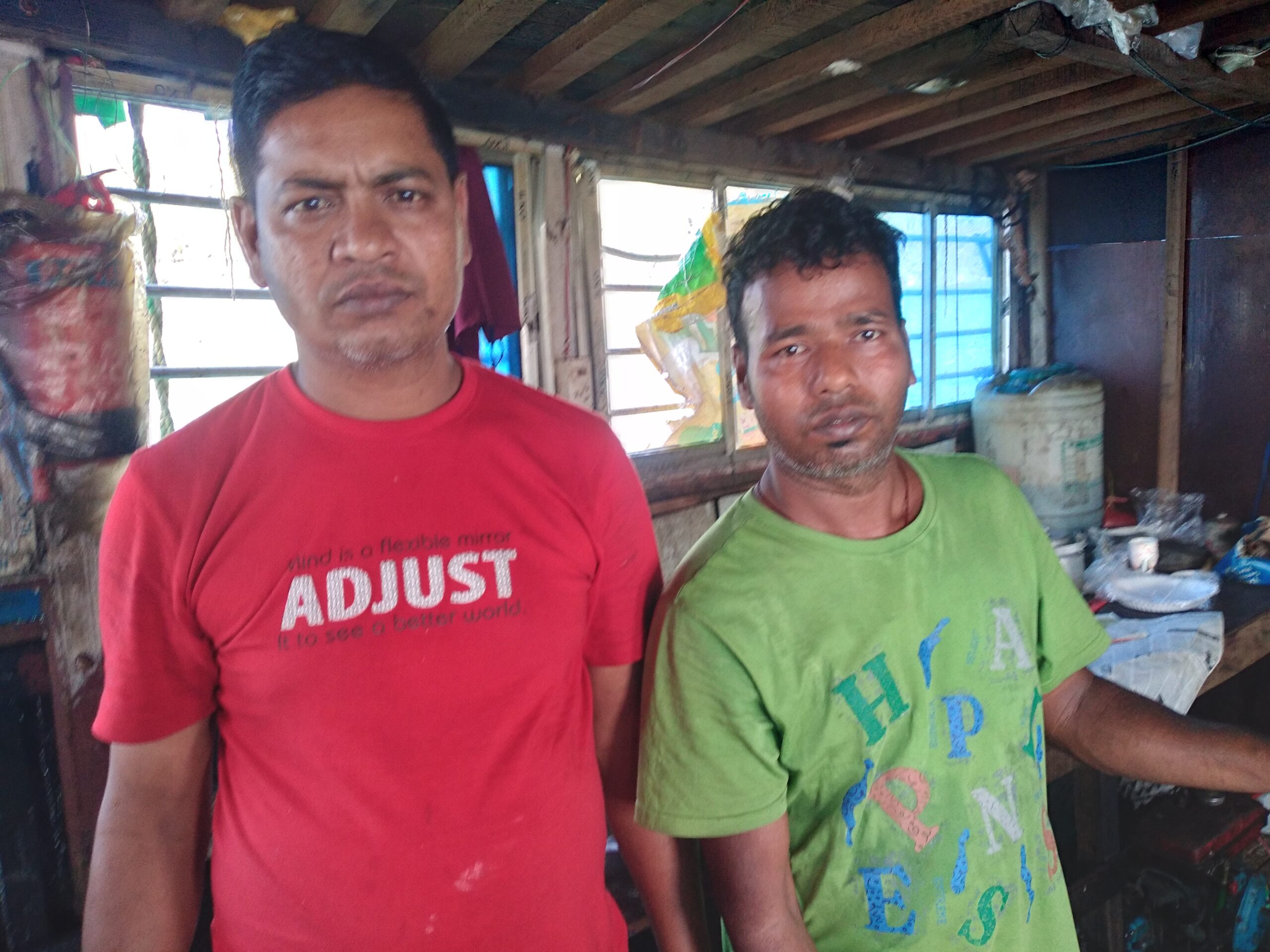
As the sun was setting on the horizon, Sardar took us to Pakhiraloy, where we had to get off to spend the night at a resort called Aponjon. Evening snack and dinner were cooked at the motor boat and served at the hotel. The tour operator’s cooks (the brother duo) were terrific. All the dishes made on the boat were delectable, I won’t forget especially Golda chingrir malai curry, doi kaatla,  betki paturi and Amudi fish fry.

Brother duo: A culinary triumph

What pained me during my visit was the unimaginable hardship and tough life the Sunderban people have to undergo especially during natural calamities. Remember the Nature’s fury and massive devastation wreaked by cyclone Aila (May 25, 2009) and tropical cyclonic storm Amphan (May 21, 2020)?

The Sunderbans mangroves acted as a natural, protective bio-shield during Cyclones Aila, Bulbul and Amphan significantly reducing wind speed by about 20kmph and breaking storm surges. The mangroves in Sunderbans region absorbed the Nature’s fury and saved West Bengal and Bangladesh. But in the process, they were badly damaged. The world’s largest mangroves impeded the wind proving yet again the importance of mangroves in safeguarding coasts from storms that are increasingly more frequent and more severe due to climate change.

All tourists landed in the Sunderbans hoping just to see tiger, but who bothers about the perennial poverty and hardship of the folks there!” I thought to myself. I was shocked to see the dismal and wretched road that leads to Loknath Temple (at Doner Mukh). When I asked a local woman who was selling Gobindobhog rice and moog dal (produced locally) how long they are subjected to such ordeal, her reply was: “Sir, for the past almost 20 years, come rain or shine, we have been seeing this appalling road condition. During rainy season things get worse. No one bothers!” her disappointment was writ large on her face. “Every day we risk our lives ambling across this poorly built brick-laid road,” she rued.

One boat staff said: “Following Cyclone Aila and Amphan huge number of tarpaulins were stacked in a college for distribution among the cyclone-hit people. Only a few, who are close to Gram Panchyat Pradhan, got them and later those tarpaulins were sold in the market.”

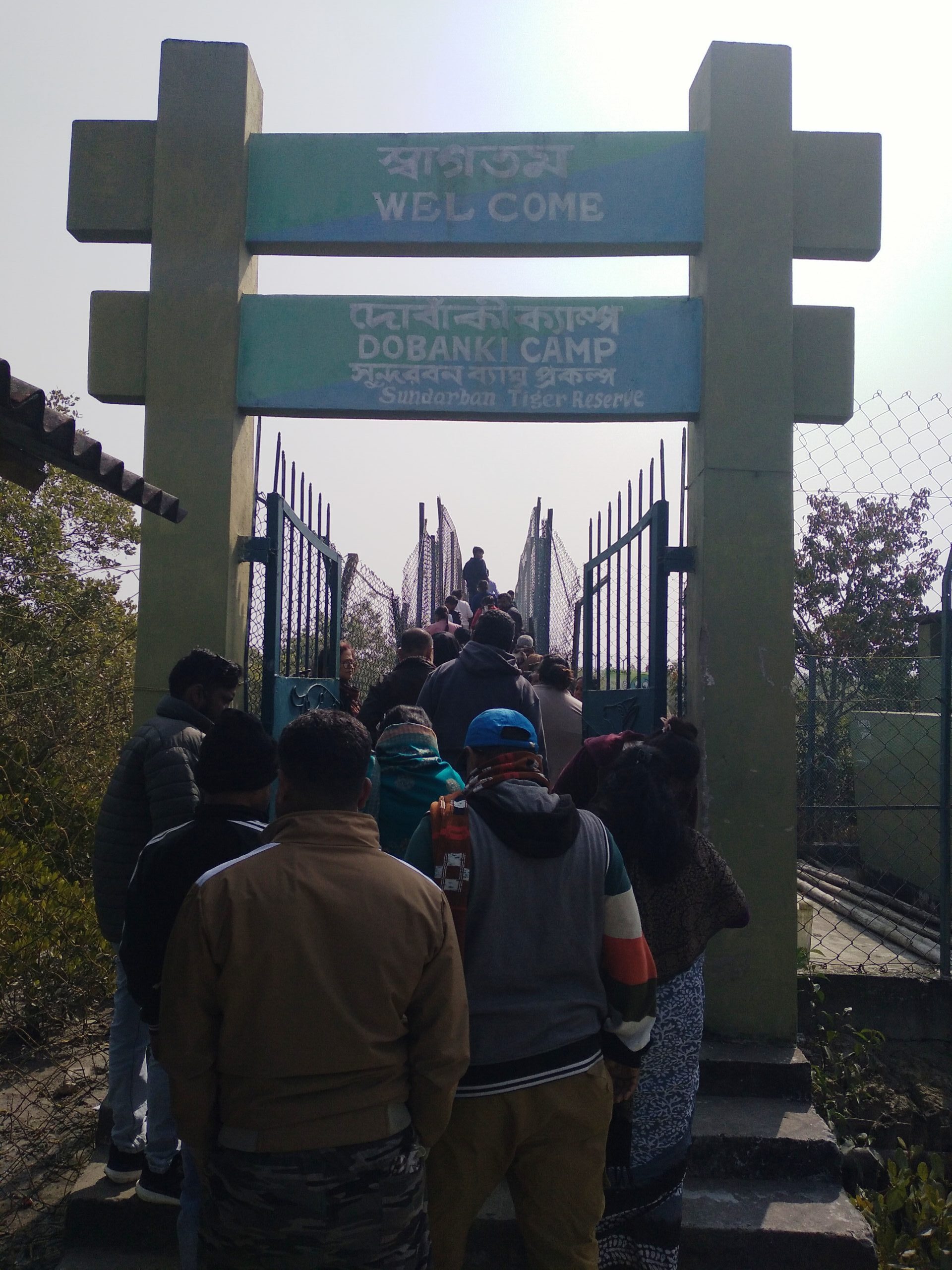
Dobanki Camp: A canopy walk

Finally, we were taken to Dobanki watch tower for a canopy walk (about half a km long and at a height of about 20 feet from the ground. It resembles a flyover with a 12-ft high side fencing grill and strong net) in the Sunderbans Tiger Reserve.

As I was getting down from the boat at Sonakhali, William Blake’s famous poem, The Tyger crossed my mind where the poet marveled at the tiger’s fierce beauty.

“Tyger tyger, burning bright,

In the forests of the night;

What immortal hand or eye,

Could frame thy fearful symmetry?..”

Bengalis’ deeply ingrained wanderlust drives them to the Sunderbans. True. But, they should remember that they must visit this forest, a Unesco World Heritage site, and embrace the unique eco-system to appreciate and cherish the marvelous bio-diversity and natural wonder of the Sunderbans.

Jharkhali Wild Animal Park: One and only mangrove zoo


Pankaj Adhikari’s Blogs

Thanks for stopping by.