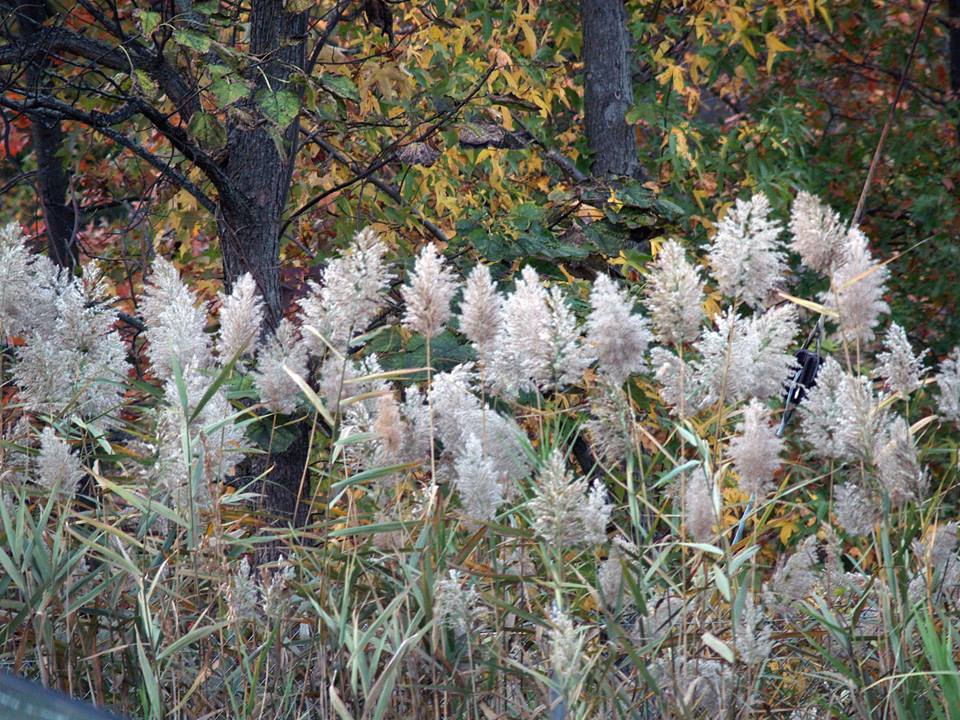
Embracing the unique eco-system of Sunderbans, not merely tiger sighting
Travel-hungry Bengali tourists coming back from Sunderbans face just one question: “Baagh dekhechhen? (Have you seen a tiger?).
It’s ridiculous and a fatuous question. Few tourists embark on a trip to the Sunderbans with a different mindset. The beauty and grandeur of this mangrove forest lie in its unique, vast eco-system. Unfortunately, tourists head toward the Sunderbans in droves, especially during in December-January (peak season) months just to witness what is known across the world as the Royal Bengal Tiger, one of the most powerful Big Cats in the world both in terms of physical strength and hunting prowess.
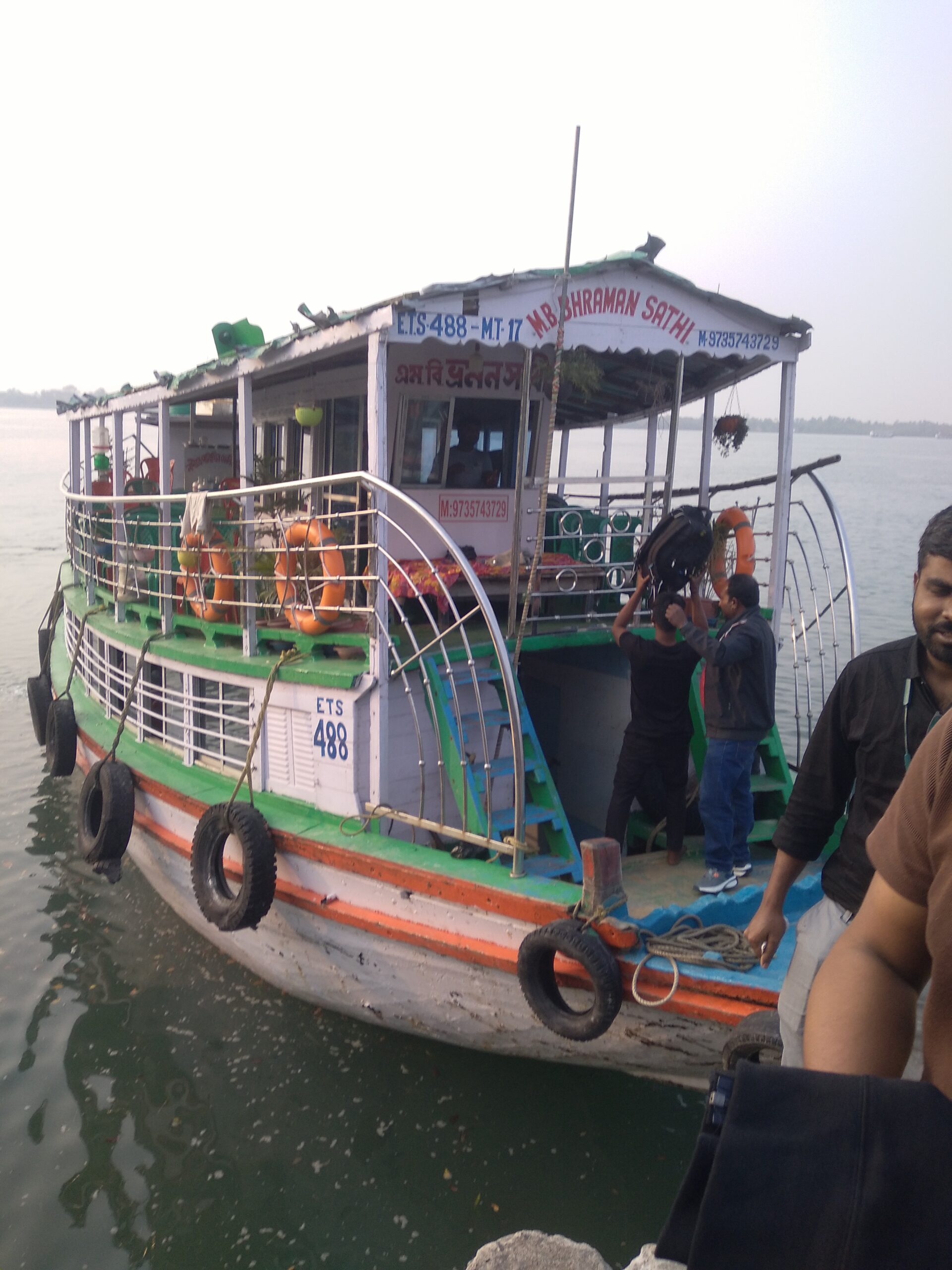
MB Bhraman Sathi: A wonderful experience
On average, a Bengal tiger weighs between 90 and 225kg, with males being large and heavier than females. The strength of a Bengal tiger can be gauged by its powerful jaws, sharp teeth and muscular body.
We (myself, my son Jishu, my childhood buddy Raju and his wife) decided to take the trip entirely from a different perspective. And At the end of the trip (two nights three days) organized by Travels Destination Sunderban, Canning, we were mighty pleased and had witnessed the unique bio-diversity of the Sunderbans: a maze of tidal rivers, creeks and islands, unparalleled bio-diversity, varied, diverse and abundant bird life and a mesmerizing landscape of dense forests, intricate root systems and the rhythmic pulse of tides — all inextricably linked with resilient local rural culture. It harbors over 450 species of fauna (including salt-water crocodiles, dolphins and turtles) and 26 mangrove species acting as a crucial, resilient natural coastal shield.
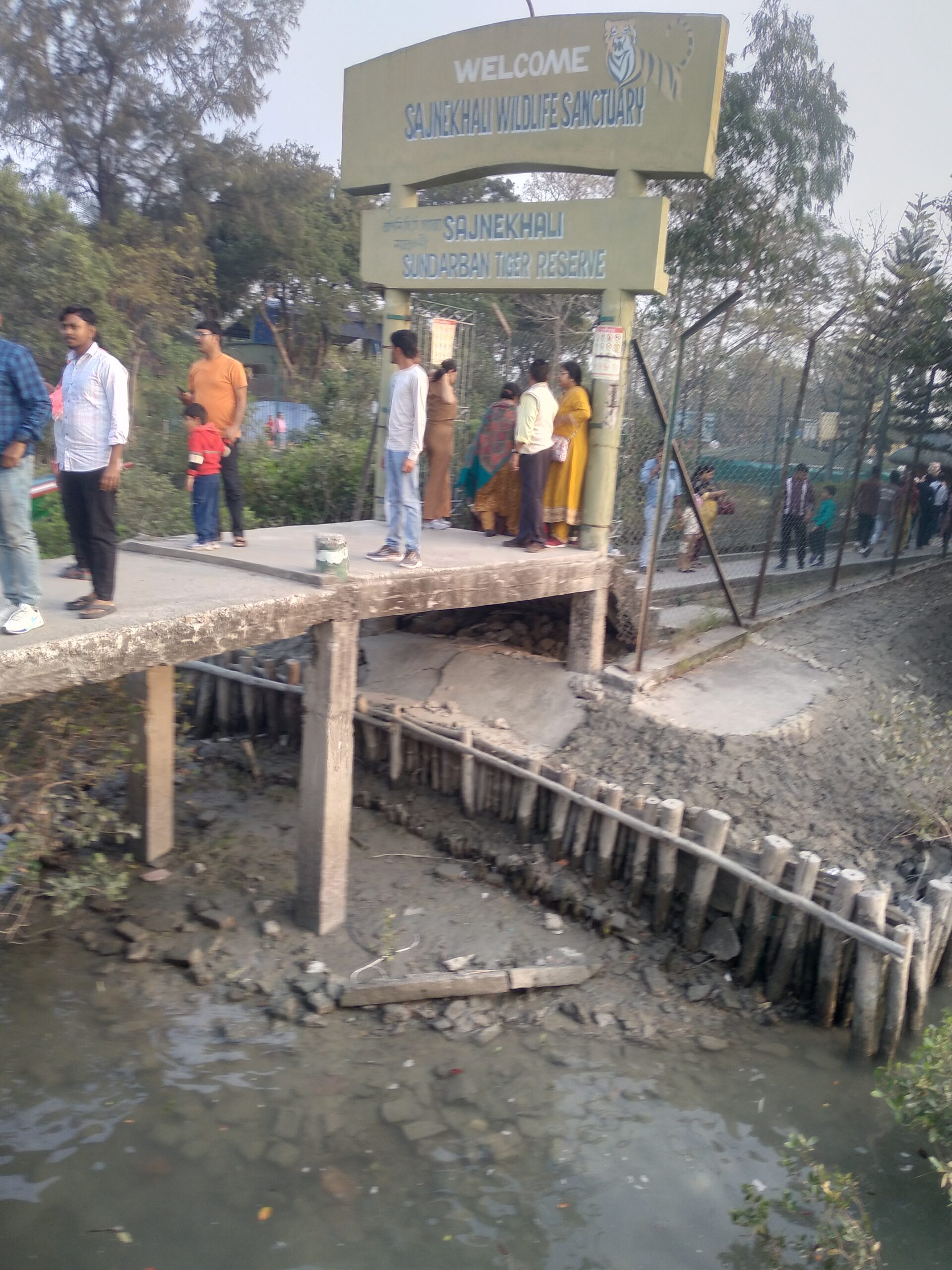
Sajnekhali wildlife sanctuary: One of the most popular watchtowers
Well, to understand the Sunderbans’ diverse eco-system, one should visit at least six to seven times. We embarked on the trip from Canning railway station at 9.15am from where we were transferred to Sonakhali (about 18kms) by an auto.
We got off the vehicle and boarded MB Bhramon sathi (that’s the name of our motor boat) anchored on the river Hegel. Sujoy and Shuvo and Babusona (the tour operator staff) warmly greeted us on the boat. We then kept our baggage in the lower deck and promptly went upstairs to take our seats. The upper deck was neatly arranged with chairs and later with tables for breakfast and lunch. Our first stop was Sajnekhali Wildlife Sanctuary.
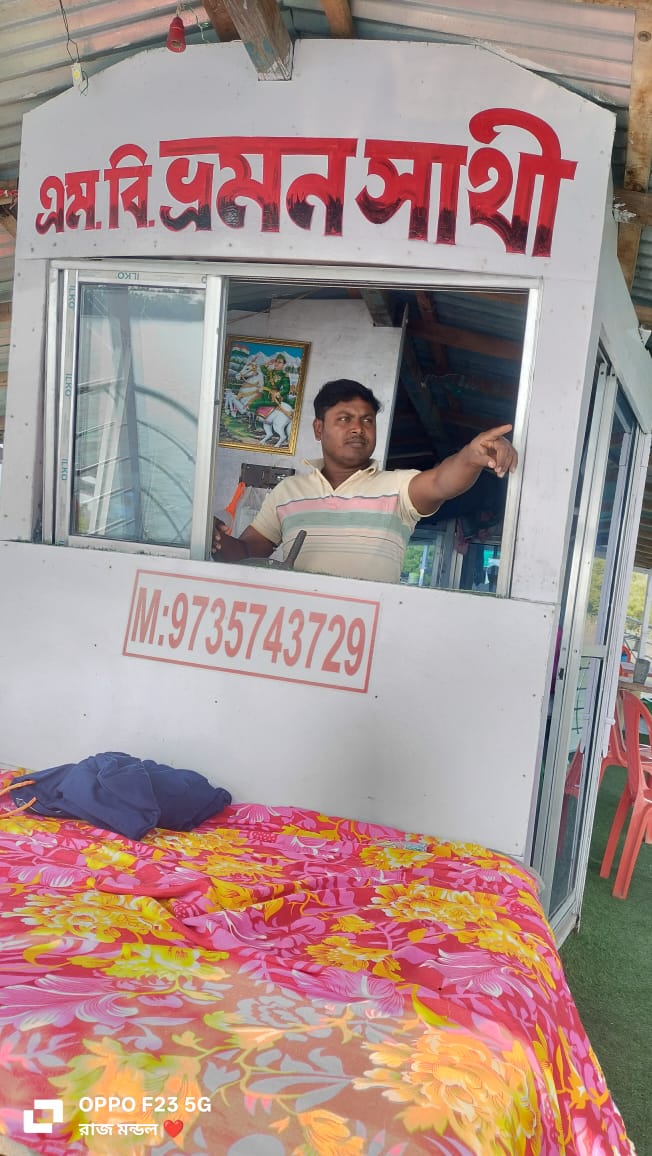
Kalu Sardar: The motor boat pilot who recounted terrifying tales
As we stood on the upper deck, the January-end crisp cold air soothed our souls. Refreshing touch of wind and whisper of cool air made my day. Soon we’re given breakfast (luchi, aloor dom and misti followed by tea). All items were very well-cooked and we enjoyed them thoroughly. I decided to talk to the pilot (locally known as sareng) of the boat to get to know the specific routes the boat will take and the places they’d take us to.
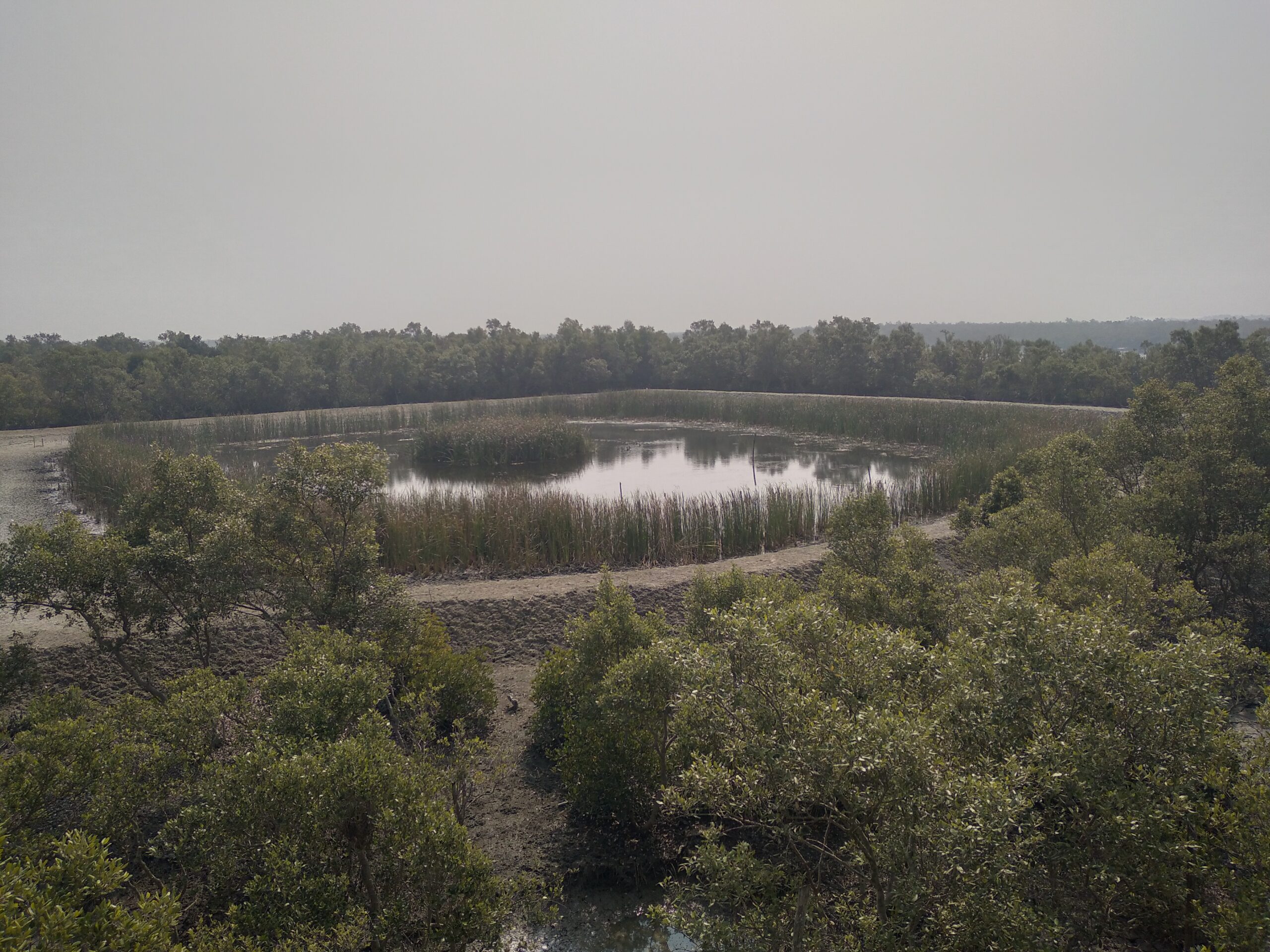
A breathtaking view from the watchtower
Kalu Sardar, the 40-year-old pilot, an ever smiling and amiable guy, hugely impressed me as he kept narrating spine-chilling anecdotes and unbelievable incidents during 22 years of his cruising experience across the creeks and rivers of the Sunderbans. “I even saw an encounter of a crocodile with a Royal Bengal Tiger,” Sardar recalled. “The battle between the two ended up with the tiger receiving serious injuries and later dying before it was taken by the Forest Department guys to the hospital.”
“I saw a tiger only last month at Bonbibi Bharani, a narrow scenic creek in the mangrove forest,” Sardar reminisced. He also told during the Aila how one old woman, her 12-year-old grand-daughter and a Royal Bengal Tiger spent a night together.
I shuddered in disbelief!!
We visited Jharkhali Wild Animal Park where two tigers, two crocodiles and two peacocks are kept. Here we saw a Tiger Rescue Centre. As we stepped into the Park, we saw a number of signboards displaying pictures of different kinds of birds found there. A big board displays pictures of official birds of all states and Union Territories of India. Here I came to know that official bird of West Bengal is white-breasted kingfisher. I felt ashamed of my own ignorance!
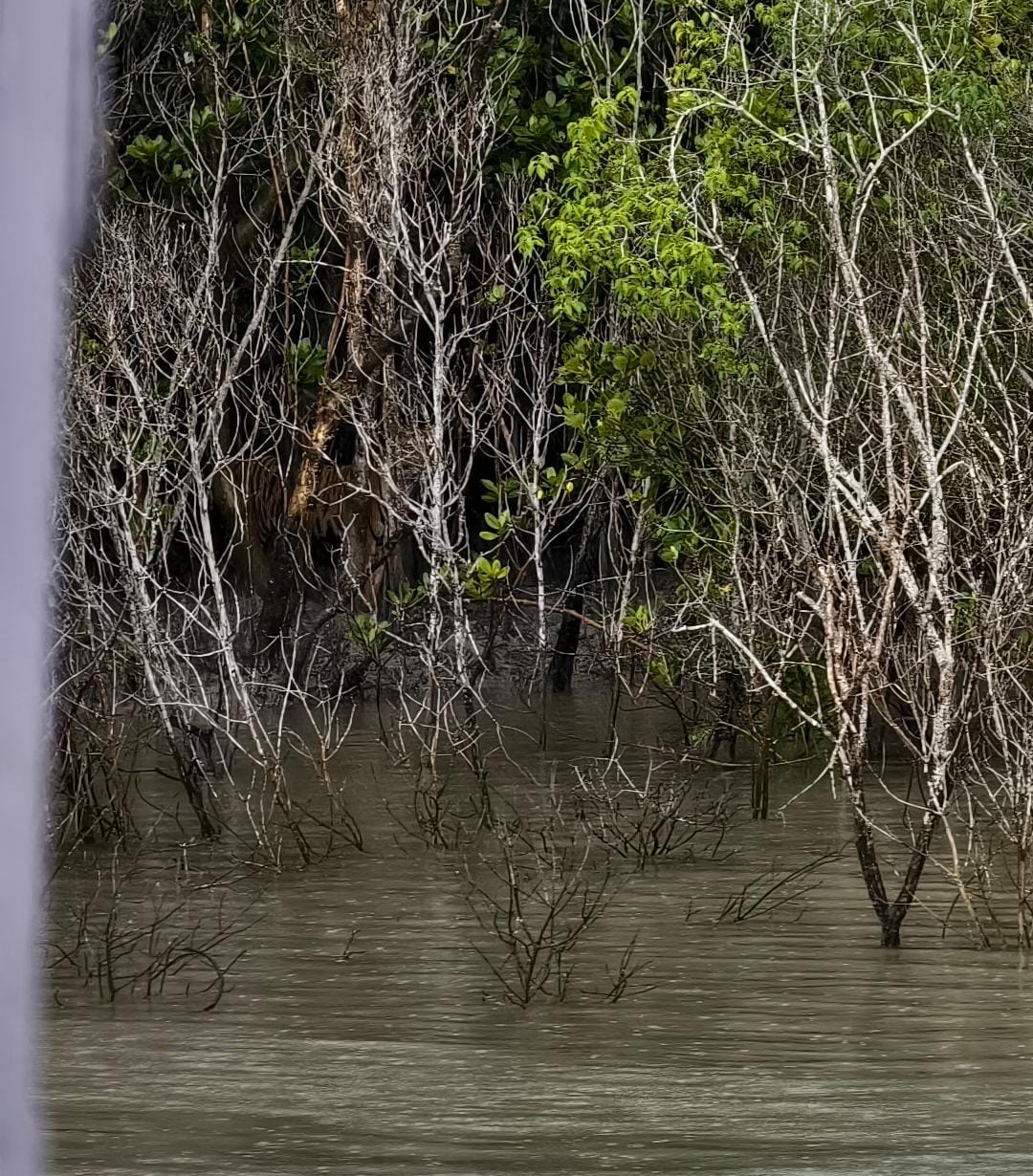
Magnificent mangrove
Another board displays pictures of different migratory water birds in the Sunderbans. We also saw a huge enclosure where an eagle was kept. Another signboard displays pictures of different types of crabs and mollusk of the Sunderbans.
As the sun was setting on the horizon, Sardar took us to Pakhiraloy, where we had to get off to spend the night at a resort called Aponjon. Evening snack and dinner were cooked at the motor boat and served at the hotel. The tour operator’s cooks (the brother duo) were terrific. All the dishes made on the boat were delectable, I won’t forget especially Golda chingrir malai curry, doi kaatla, betki paturi and Amudi fish fry.
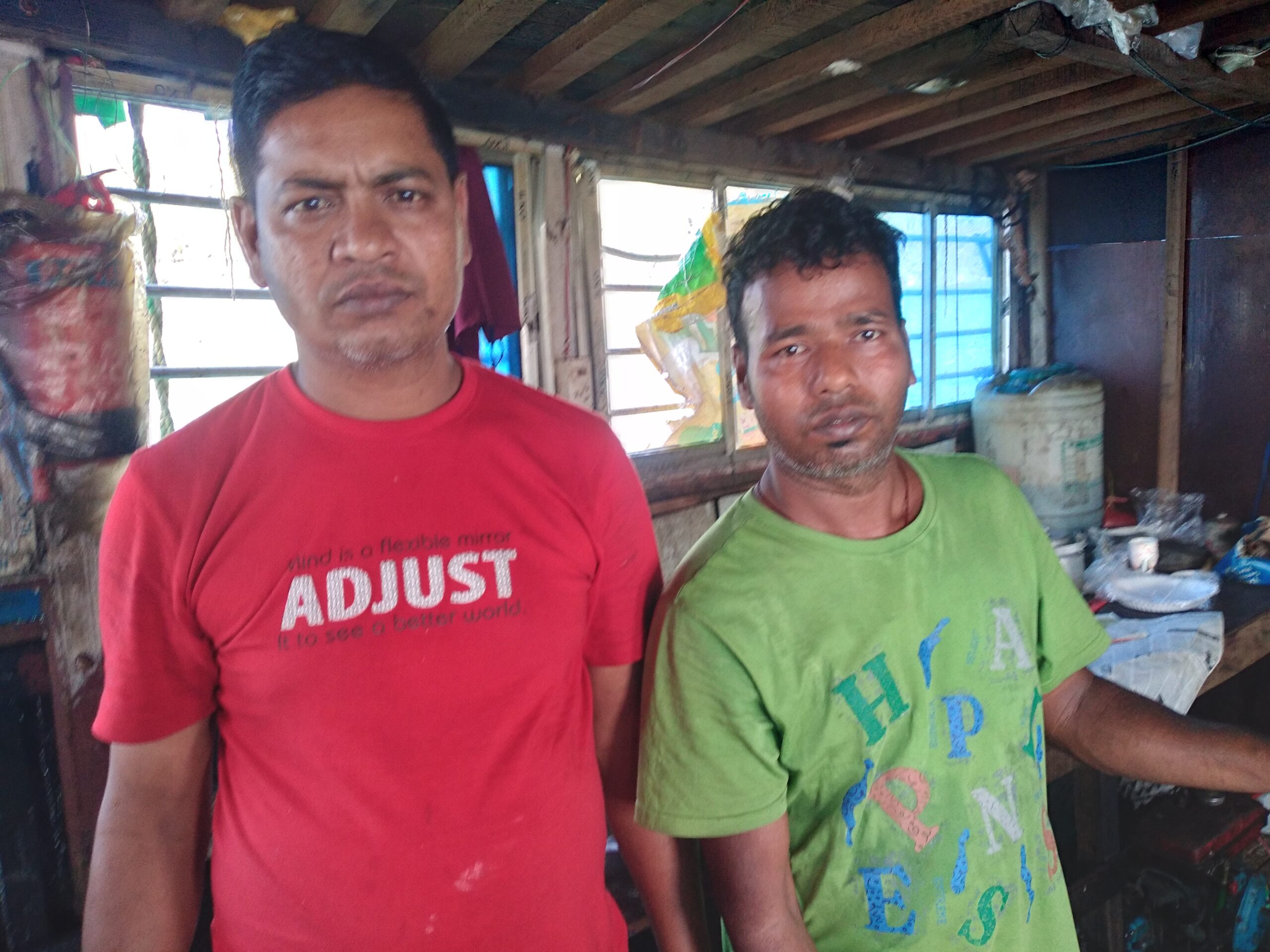
Brother duo: A culinary triumph
What pained me during my visit was the unimaginable hardship and tough life the Sunderban people have to undergo especially during natural calamities. Remember the Nature’s fury and massive devastation wreaked by cyclone Aila (May 25, 2009) and tropical cyclonic storm Amphan (May 21, 2020)?
The Sunderbans mangroves acted as a natural, protective bio-shield during Cyclones Aila, Bulbul and Amphan significantly reducing wind speed by about 20kmph and breaking storm surges. The mangroves in Sunderbans region absorbed the Nature’s fury and saved West Bengal and Bangladesh. But in the process, they were badly damaged. The world’s largest mangroves impeded the wind proving yet again the importance of mangroves in safeguarding coasts from storms that are increasingly more frequent and more severe due to climate change.
All tourists landed in the Sunderbans hoping just to see tiger, but who bothers about the perennial poverty and hardship of the folks there!” I thought to myself. I was shocked to see the dismal and wretched road that leads to Loknath Temple (at Doner Mukh). When I asked a local woman who was selling Gobindobhog rice and moog dal (produced locally) how long they are subjected to such ordeal, her reply was: “Sir, for the past almost 20 years, come rain or shine, we have been seeing this appalling road condition. During rainy season things get worse. No one bothers!” her disappointment was writ large on her face. “Every day we risk our lives ambling across this poorly built brick-laid road,” she rued.
One boat staff said: “Following Cyclone Aila and Amphan huge number of tarpaulins were stacked in a college for distribution among the cyclone-hit people. Only a few, who are close to Gram Panchyat Pradhan, got them and later those tarpaulins were sold in the market.”
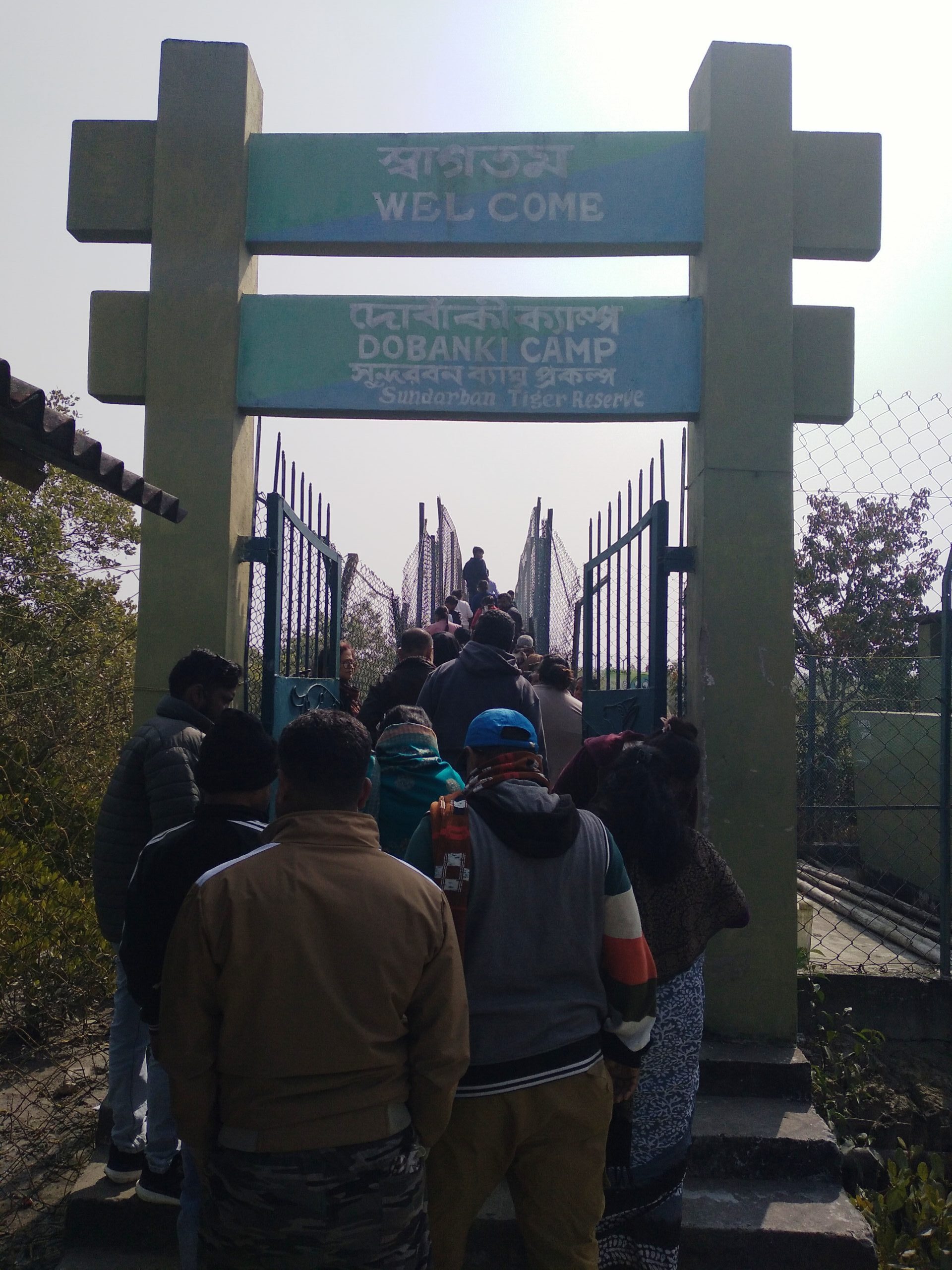
Dobanki Camp: A canopy walk
Finally, we were taken to Dobanki watch tower for a canopy walk (about half a km long and at a height of about 20 feet from the ground. It resembles a flyover with a 12-ft high side fencing grill and strong net) in the Sunderbans Tiger Reserve.
As I was getting down from the boat at Sonakhali, William Blake’s famous poem, The Tyger crossed my mind where the poet marveled at the tiger’s fierce beauty.
“Tyger tyger, burning bright,
In the forests of the night;
What immortal hand or eye,
Could frame thy fearful symmetry?..”
Bengalis’ deeply ingrained wanderlust drives them to the Sunderbans. True. But, they should remember that they must visit this forest, a Unesco World Heritage site, and embrace the unique eco-system to appreciate and cherish the marvelous bio-diversity and natural wonder of the Sunderbans.
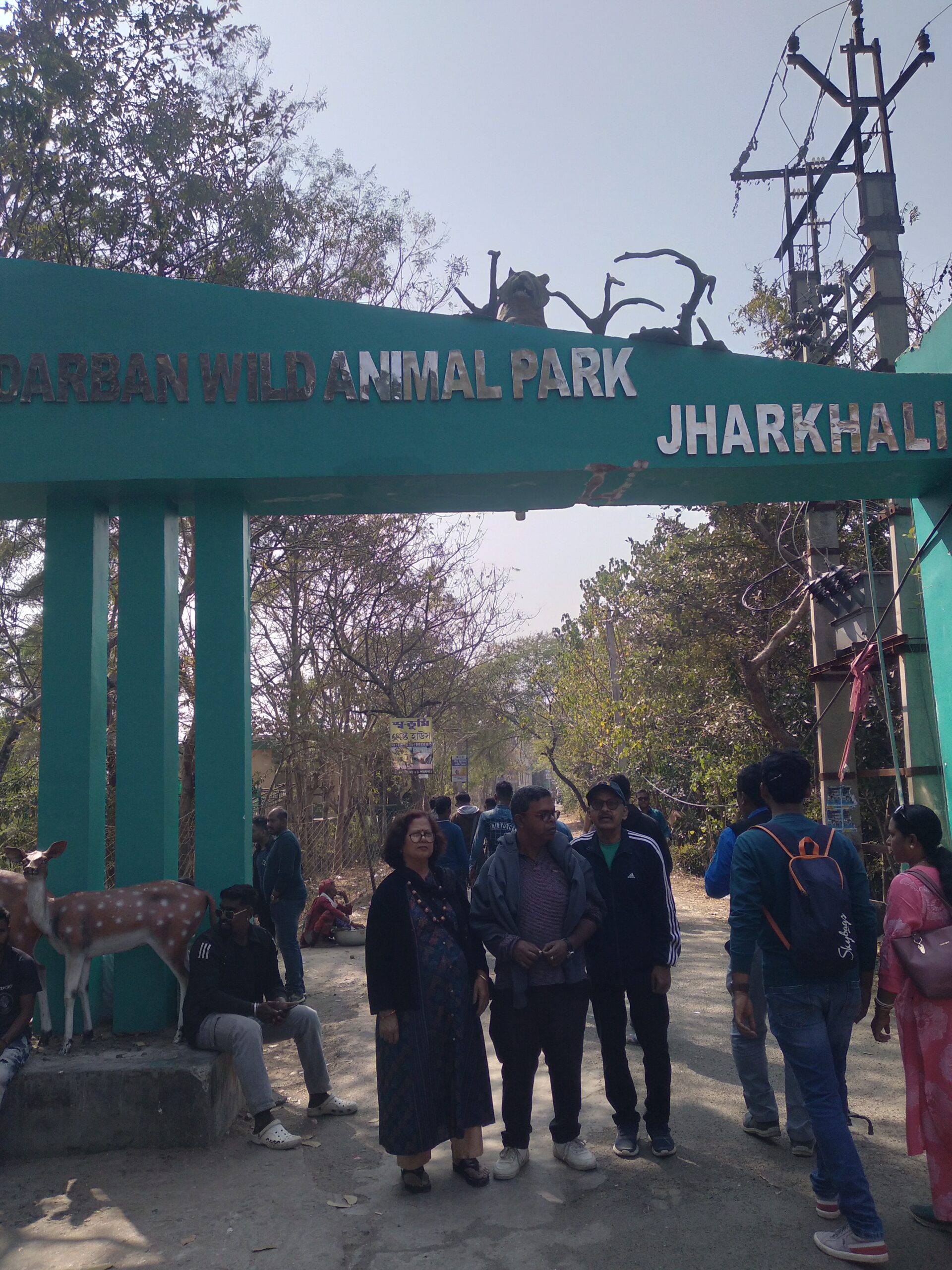
Jharkhali Wild Animal Park: One and only mangrove zoo