• pankajcd@gmail.com
  • +91 86209 06088

Monthly Archives: June 2026

  • -

Iran calls for ‘fairness and honor’; Teremi slams FIFA

Tags : 

On a day when Cape Verde, an archipelagic country in the central Atlantic Ocean, off the coast of west Africa and with a population of just half a million, scripted history, Iran’s never-say-die spirit in the match against Egypt will be remembered by football fans across the world for a long time.

It was such an exciting game from the opening minutes to the closing seconds in the Seattle Stadium!

Iran’s winning goal was overturned by the VAR check in the dying moments of the match — which could have been a historic win for them for qualifying for the knockout stage for the first time in the FIFA World Cup 2026.

The team now has to wait for results elsewhere to determine whether they advance as one of the tournament’s best third-placed teams.

Iran had qualified for the World Cup on seven occasions — 1978, 1998, 2006, 2014, 2018, 2022 and 2026.

Iranian captain Mehdi Taremi fired a broadside against the FIFA authorities after the match describing it as “disaster World Cup” and accused its president Gianni Infantino for their poor and biased handling of his country’s World Cup campaign. “No one helped us,” he rued.

One could well imagine Taremi’s woes which will keep haunting him throughout his life as he had missed the penalty earlier in the match.

Since the team’s arrival in May, they were due to be based in Tucson, Arizona during the tournament but they were shifted to Tijuana, Mexico for the ongoing military conflict in the Middle-East.

Iran has been struggling against all odds since the UN and the US sanctions in 1979. The team had been subject to inhuman treatment in the US since their arrival.

Their misery began after the arrival on the American soil: strict visa denials, travel restrictions, and unspeakable harassment. The team encountered airport delays, was barred from overnight stays, and faced protest and violence directed at their fans.

The Council on American-Islamic Relations (CAIR-LA) has reported multiple instances of verbal abuse, hate-based targeting and physical violence directed at Iranian fans outside their LA matches.

“Seattle called it (Iran-Egypt tie) the Pride Match, FIFA called it whatever the room wanted to hear,” according to a report by The Athletic.

Iran’s football head coach Amir Ghalenoei, has said his team is “the most oppressed team in the whole World Cup”. Iran was forced to return to Mexico immediately after the match against New Zealand, halving typical training and recovery time. Als0, as many as 15 support staff and delegation members were denied entry visas to the US.

The team left a hand-written message after the match calling for “fairness and honor” in their Seattle locker room as they wait to see if a third-place finish is enough to advance to the round of 32. With three Groups playing on Saturday and some of the countries called out by name, the message appears to call on all sides to try and win under the spirit of fair play and settle for results which are mutually convenient but likely to see Iran eliminated.

World Cup is much more than football—it’s a global celebration of unity and camaraderie that brings people from across the world  together. Sport and politics mustn’t be mingled. Let football be football.

Friday’s match reminded me of Tagore’s immortal words in his short story, Nastoneer: “Kadambori moriya proman korilen morey nai’ (In death, Kadambori proved that she hasn’t died)


  • -

Strait of Hormuz closed; politics plays spoilsport

Tags : 

On February 28, when the US and Israel had attacked Iran, a war which was absolutely unnecessary and illegal, President Donald Trump had told the world he would ‘finish the job’ fast either through negotiations or renewed military strikes.

However, what the world has been witnessing since then is altogether a different scenario: a country of about 90 million people’s dogged determination to fight back.

Iran’s top military command yesterday announced the closure of Strait of Hormuz citing alleged US non-compliance with a peace agreement and continued Israeli military operations in Lebanon. “The closure of the Strait is the first step”, Iran said warning that additional measures could follow if “aggression” continued.

On Sunday, US vice-President J.D.Vance had met the Iranian negotiators in Zurich.

On June 16, President Trump had said he and the vice president had signed electronically a document with the Iranians, finally ending the war formally.  He also announced that Iran had agreed to open the Strait of Hormuz, and that the US had won the war.

Has the war really ended? Can the US-Iran ‘deal’ survive the Israeli bombing on Lebanon?

On March 14, in an interview with CGTN, renowned economist Prof Jeffrey Sachs had said that the US and Israel had ‘underestimated’ Iran. He also added that over the past 25 years the US military had attacked countries, including Afghanistan, Iraq, Libya and Venezuela.

After the ceasefire deal early this week, the US economist had expressed doubt saying: “Is it a peace deal or tactical pause?” The deal, mediated by Pakistan, was extremely “fragile given that Israel was not a formal party to the agreement”, Prof Sachs, also a distinguished public policy analyst,  had added.

The agreement, he said, seemed to call for an end of hostilities. The phrase that the Pakistani announcement used, Prof Sachs added, was “a permanent end to hostilities. It ostensibly comes in phases, and two broad phases. One is to reopen the Strait of Hormuz and the international oil and gas traffic. And the second phase is about the nuclear issues….”

Prof Sachs also said: “It seemed that the agreement does not include other kinds of demands that the US had once upon a time put on the table about Iran’s missile system or its support for other groups in the region such as Hezbollah…”

Prof Sachs tore into President Trump’s ‘thuggish behavior’ saying that the US President had proven wrong after he had threatened to bomb Iran “back to the Stone Ages”. He also said ‘such rhetoric must stop’.

The war against Iran has triggered an unprecedented global energy crisis. Iran’s strategy of blocking the Strait of Hormuz, the world’s most vital energy maritime choke point, has made Trump bewildered and baffled.

For Iran, it’s not a war of choice — it’s a battle for existence — a battle for which the nation had been preparing since the 1979 sanctions, largely spearheaded by the US and the UN.

The sanctions caused a significant economic strain on the Khomeini regime. Military analysts and intelligence guys, however, are stunned by Iran’s retaliatory resilience. The country has proved its ‘missile dominance’ after eight weeks of US’ aerial bombing.

Iran ‘most oppressed team’ in FIFA World Cup 2026

Meanwhile, Iran’s football head coach Amir Ghalenoei, has said his team is “the most oppressed team in the whole World Cup”. According to an al Jazeera report, Iranian players are extremely unhappy over the restrictions imposed on them: they can travel to venues only 24 hours of their fixture and must return to their training base in Tijuana, Mexico, directly after each game.

Iran was forced to return to Mexico immediately after the match against New Zealand, halving typical training and recovery time. Als0, as many as 15 support staff and delegation members were denied entry visas to the US.

Andrew Giuliani, executive director White House FIFA World Cup Task Force, has defended the strict travel restrictions for the Iranian national team.

World Cup is much more than football—it’s a global celebration of unity and camaraderie that brings people from across the world  together. The way Iranian players are being treated on the American soil is a shame on the US, one of the three countries hosting the World Cup this year.

Update

US and Iran have agreed to reach final ‘deal’ in 60 days. Negotiations continue in Switzerland

Iran produced a disciplined display against Belgium last night and one win away from making history


  • -

Private hospitals and profiteering

Tags : 

Doctors working in private hospitals work under severe pressure from the management for whom nothing else matters except profit–profit with a capital P.

True, the owners have invested a huge amount of money to set up these hospitals and they have to recover the money. ‘They aren’t doing any charity’, a city-based cardiologist once said. But, in reality, what we see is mindless profiteering without any social responsibility.

They are ruthless mercenaries determined to loot money using every possible unscrupulous ways and unfair means.

As soon as a consultant is appointed to a private hospital, he or she is given a target which means the doctor has to get certain number of patients or close to that number. If the doctor fails to meet the target, he would be chucked out.
Working under such a system, a doctor is always under pressure. He knows his job will be on the line, if he doesn’t meet the target. So, to save his job, the doctor has no other option but to resort to malpractices.

It has been alleged that a city-based private hospital has struck a deal with a government hospital in the city. Moribund patients from that government-run hospital are allegedly shifted to the private hospital.

Patients are put on life-support system even though the doctor in charge of the Emergency Department knows very well that the patients will die within 10 to 12 hours, it has been alleged.

Inhuman!

It has been alleged a ‘well-known cardiologist’ in a city private hospital asked his student doing MD in Bardhaman to get patients. The deal is for every patient requiring angioplasty, the student will get Rs 10,000.
What happened later is shocking! The student told his ‘Sir’ about a patient who needed angioplasty. When the ‘Sir’ told his student that the patient must shell out Rs 1.5 lakh for stent implant, the student pleaded it would be very difficult for the patient to arrange the fund.

However, the patient’s family members did finally arrange that amount with much difficulty. After the angioplasty was done, the patient was handed a bill of Rs 1.8 lakh (Rs 30,000 more than what the ‘Sir’ told him). The student, who does private practice in spare time, was stunned to hear this.

For him, it’s a huge loss of face as he had told his patient’s family that the angioplasty would cost Rs 1.5 lakh. The patient’s family had really a tough time to arrange for the money.

The student said he decided that he would forgo his ‘commission’ of Rs 10,000 and would ask his ‘Sir’ to bail him out or else his practice will suffer in Bardhaman. One can well understand the predicament of the student-doctor!
Numerous instances are there about how the hospital authorities are fleecing ordinary people. A patient, for instance, was admitted to a private hospital in Kolkata. When she was discharged from the hospital, her family members, much to their surprise, found that they were handed an inflated bill.

It has been alleged the hospital had charged Rs 960 for four days for physiotherapy even though no physiotherapy was done. Besides, even though the doctor under whom she was admitted didn’t turn up on Saturday and Sunday, the patient was charged with the doctor’s fees for the two days.

In a heavily privatized and under-regulated market, exorbitant medical bills are pushing millions to poverty, thereby depleting patients’ life savings. In India, out-of-pocket (OOP) spending constitutes over 90% of total health expenditure, heavily impacting vulnerable households. A OOP burden implies a direct financial costs a household pays for medical care such as doctor visits, drugs and diagnostic tests—that are not reimbursed by health insurance.

India ranks among the highest in Southeast Asia for OOP health expenditures, with over 39 million residents pushed into poverty annually due to inflated and fake medical bills.

My question is: profit-making is okay, but profiteering isn’t.

Are the private hospital owners listening?


  • -

Lucky Restaurant: Badshah of Biriyani in Mumbai

Tags : 

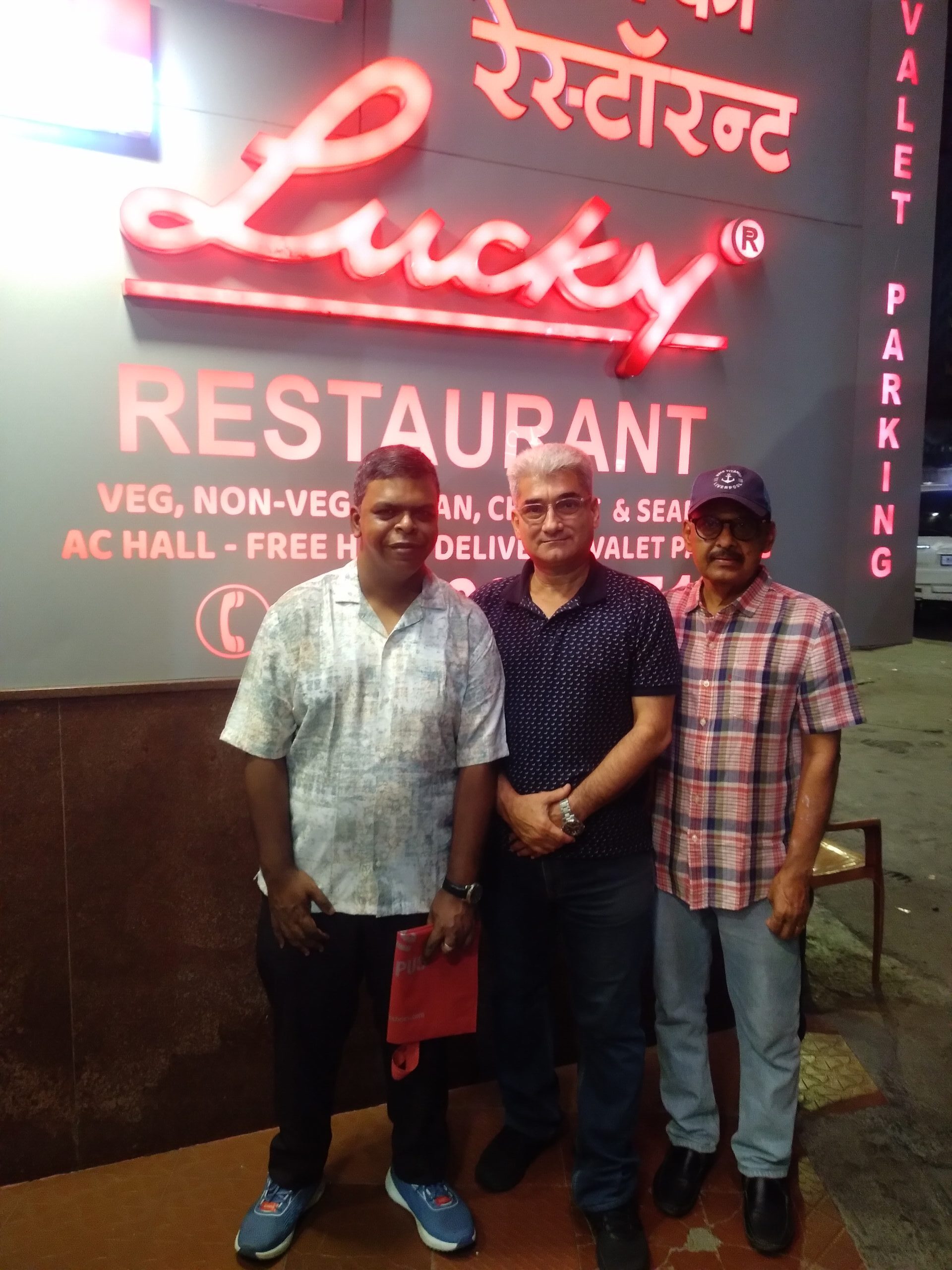
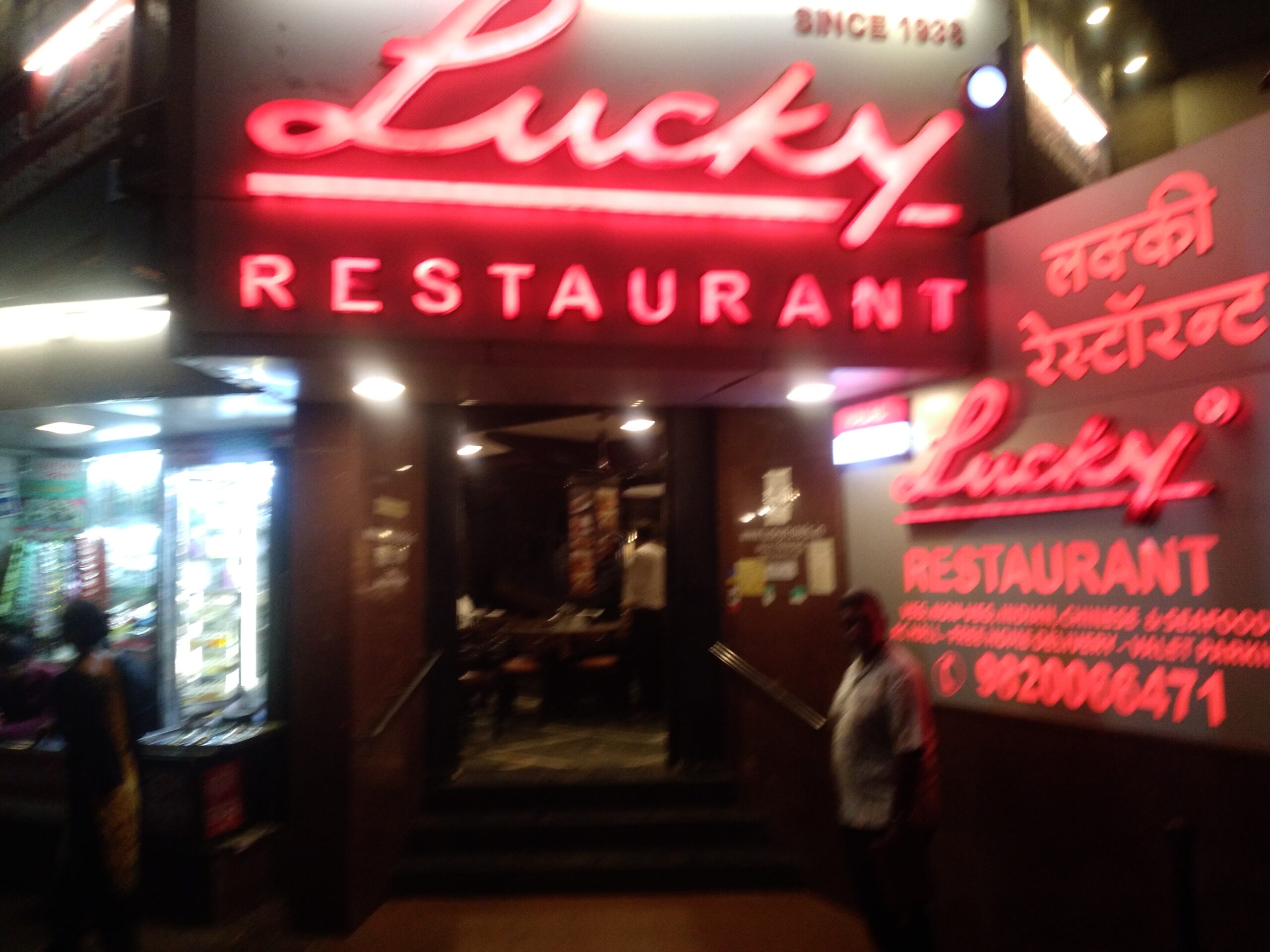
Amid Mumbai’s bustling Bandra at the crossing of Hill Road and SV (Swami Vivekananda) Road, barely 100m from Bandra railway station, stands a restaurant that has stood the test of time. A restaurant that has been serving legendary Mughlai dishes since 1938. Ask any Mumbaikar where he would love to have mutton biriyani and Murgh Mussallam, the answer will be an emphatic ‘Lucky’— the restaurant that has been attracting celebrities and foodies over the past eight decades.

As the Akasa Air was set to touch down at Mumbai’s CSMI airport early in the morning, I could see up close how the ‘Maximum City’ has transformed itself from the time I had last visited.

As our check-in time at the hotel was at 12pm, we decided to drive to the 88-year-old iconic restaurant for breakfast. The restaurant is currently run by the octogenarian Sayed Safar Ali and his son Sayed Mohsen. “My grandfather Sayed Ali Akbar landed in Bombay all the way from Yazd, a historical city in Iran in 1912. Earlier, there was a car showroom here which was set up by Dr De’ Monte. Almost half of Bandra was owned by him, ” said Mohsen, who had joined the family business in 1984.

“Sayed Ali Akbar had a restaurant in Bandra Bazar and was traveling from the city to Bandra suburb in local train. Once he changed his route to his restaurant and luckily saw the present Lucky restaurant building which at that time was a car showroom owned by Dr De’ Monte. Sayed Ali Akbar had mentioned this to his friend, Mr Karai, who was a social worker and a friend of Dr De’ Monte. He had asked my grandfather whether he was keen on setting up a restaurant. Sayed Ali Akbar had paid Dr De Mone a paltry sum of Rs 375 and decided to set up a restaurant there.  Lucky Restaurant  was thus founded at Bandra bazaar on September 9, 1938. The name ‘Lucky’ was given as my grandfather had got the property by sheer stroke of luck,” Mohsen, a street-smart guy, recalled. (The city came to be known as Mumbai from 1995).

Sayed Ali Akbar founded the restaurant and left it to his seven sons and two daughters. “Lucky has since become a family business,” Mohsen, a graduate from MMK College of Commerce and Economics, said adding his father Syed Safar was only 10 when he had joined hands with his father Syed Akbar at this restaurant.

Sayed Safar Ali, who used to work at a Pune restaurant, had moved to Madanpura, a vibrant street food bazaar that was known for its rich cultural heritage in south-central Mumbai. He was working there as a tea-coffee maker. “My father was a bright student. He had studied Botany at National College, Bandra,” he added.

During the WWII, Lucky used to serve mill workers whose first shift used to begin at 6am. Troops would stop by the eateries for meals during their breaks, Mohsen said. “Mumbaikars’ lifestyle improved after the British left India, and families started visiting restaurants.”

When the restaurant was opened, it offered only biryani, kheema pau, mutton chop, vegetarian daal, coffee, and tea. ‘Lucky’ has now over 100 different items on its menu. “Earlier we never tried tandoori chicken. After India became free in 1947, a restaurant named La Bella, along with A1 Grill, in south Bombay had introduced tandoori chicken. We later added that to our menu,” Mohsen said.

Sayed Mohsen (Centre): Captain courageous

After India’s Independence, Sayed Ali Akbar’s business took a upswing and the ‘Lucky’ grew more rapidly. In 1983, a hotel was built. A bakery unit was also opened in 1991. The ‘Lucky’ has opened another outlet in Goregaon in 2010. “We’ve over the years perfected the art of authentic biriyani cuisine. Our biriyani has alu (potato) in it, the typical Kolkata biriyani,” Mohsen said. “I’ve also introduced Chinese, BBQ and continental cuisine.”

“Since its inception, my grandfather never compromised with the quality of food,” he said. “Even today I keep striving hard to ensure that Quality is King at Lucky,” he said, beaming with pride. “In the coming years, nobody would possibly cook at home,” said Mohsen recalling how his grandmother would cook at home during those days and the aroma would spread to neighboring homes.

“It was here at Lucky restaurant filmmaker Vivek Vaswani, who was instrumental in launching Shah Rukh Khan’s film career, had signed the contract for SRK’s first movie ‘Raju Ban Gaya Gentleman in 1986,” he said pointing at the table where the deal was struck.

Years earlier, a young Salim Khan, newly arrived in Mumbai, would begin his morning cup of tea here. “Our signature mutton biriyani is Salman Khan’s favorite. He and his family members often come here,” said Mohsen, who spends almost his entire day at the restaurant to host his guests. Amazing!

The writer of the story has savored chelo ghost. It’s a typical Mughlai specialty served with generous amount of buttery saffron-infused rice, topped with succulent, slow-cooked mutton. It’s just out-of-the-world.

Lucky’s timeless charm has attracted celebrities like Sanjay Dutt, Manish Malhotra, Karan Johar, Amit Kumar, Shilpa Shetty and Bipasha Basu. “These days they prefer takeaway food especially our signature items mutton biriyani, and kebab,” Mohsen said.

How will he explain the Lucky’s USP? “Three ‘H’s… honesty, humility and hard work,” Mohsen said, his eyes took on a sparkle.

Lucky restaurant: Where history meets biriyani


Pankaj Adhikari’s Blogs

Thanks for stopping by.